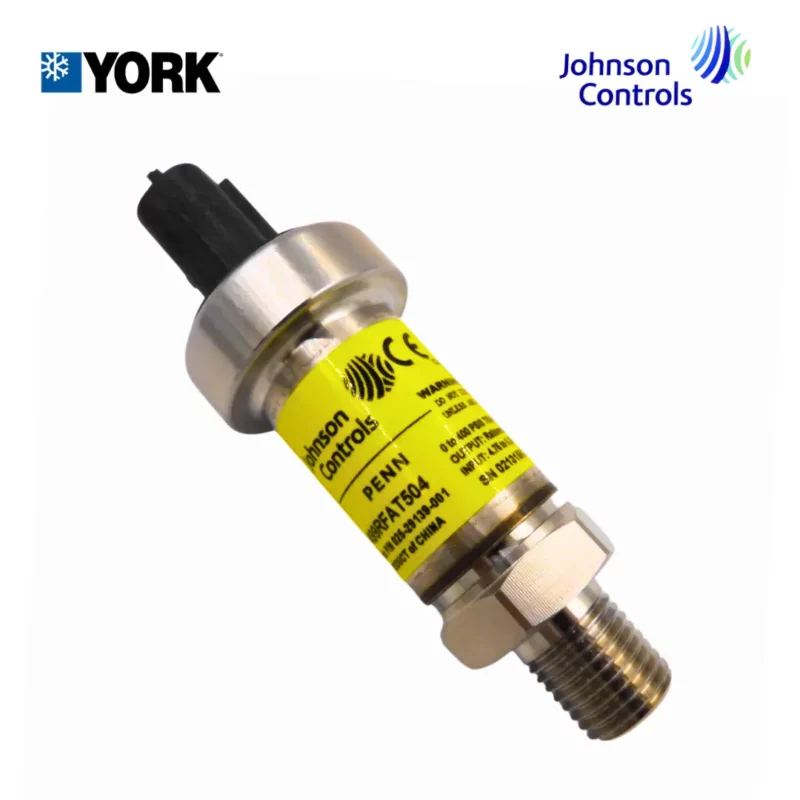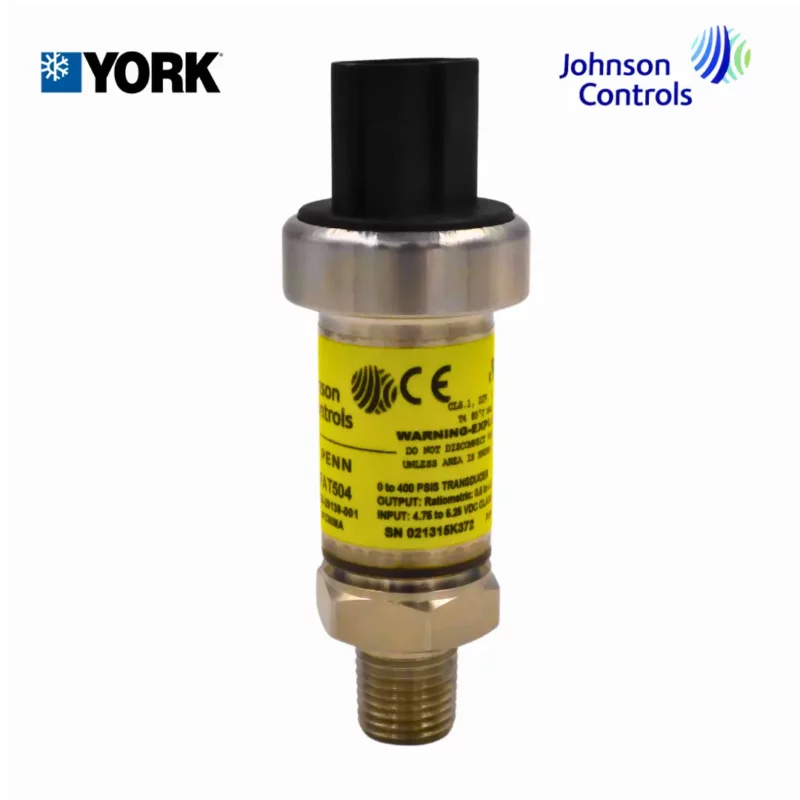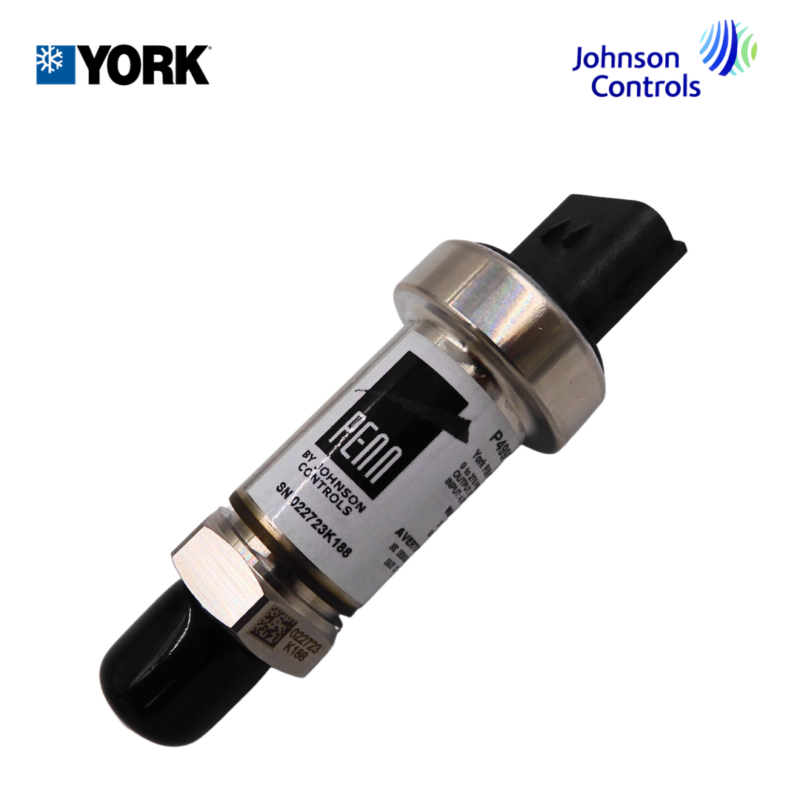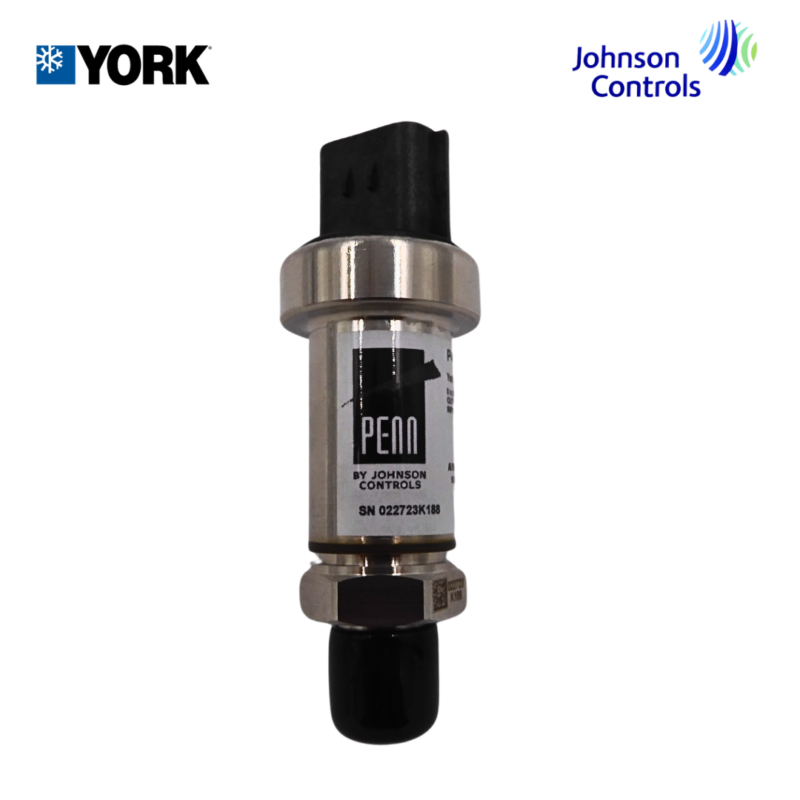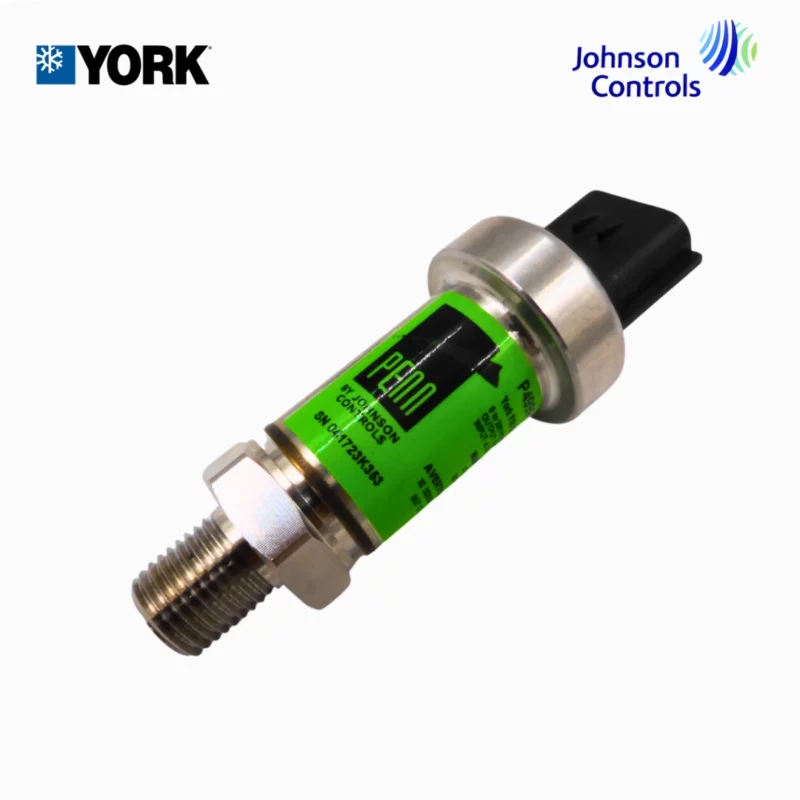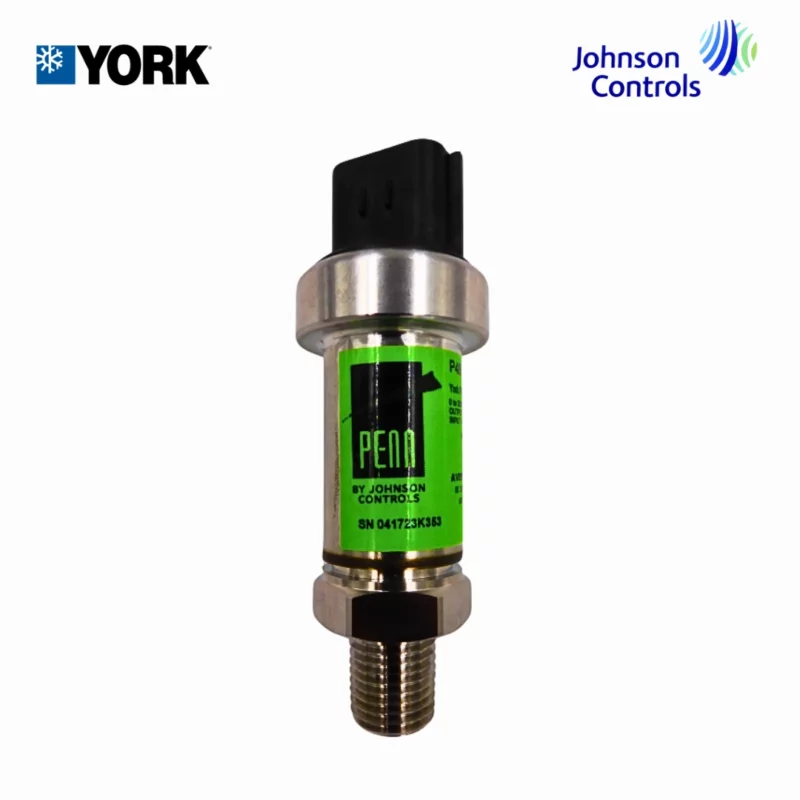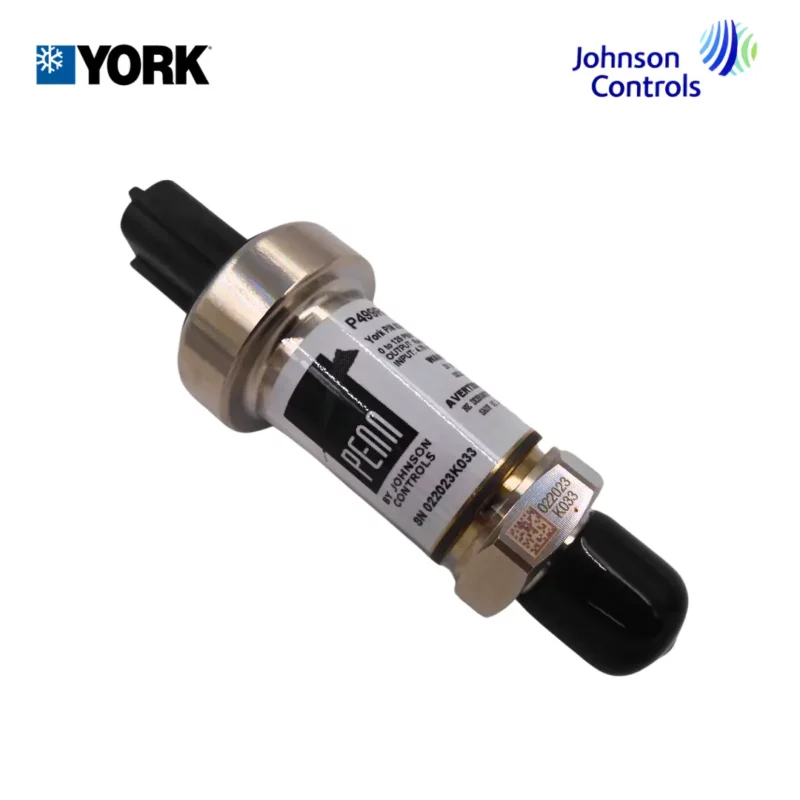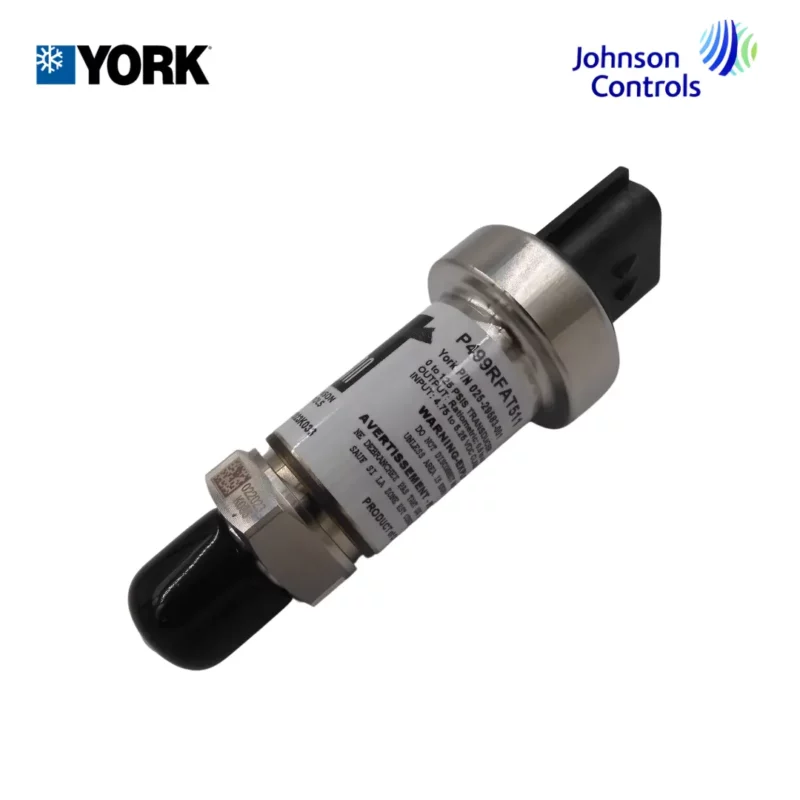

Pressure Transducers
Did You Know? 

Pressure transducers in York chillers continuously monitor internal system pressures and convert them into electrical signals for the electronic control center (such as the OptiView panel).

This real-time monitoring allows the chiller's microprocessors to optimize efficiency, maintain safety limits, and dynamically adjust components like the compressor pre-rotation vanes (see below for explanation), variable speed drives, and expansion valves.

Core Functions of Pressure Transducers in York Chillers

    • Compressor Protection: Monitors oil pressure, high-side discharge, and low-side suction to instantly shut down the system if pressure thresholds cross unsafe limits.
    • Capacity Regulation: Signals the control panel to open or close pre-rotation vanes (PRVs) and adjust compressor speed to match the building's shifting cooling load.
    • Subcooling and Superheat Control: Tracks refrigerant pressure entering and leaving the condenser and evaporator to regulate electronic expansion valves (EEVs) for optimal heat transfer.
    • Surge Prevention: Compares discharge and suction pressures in centrifugal chillers to detect aerodynamic stalling (surging) and automatically initiates corrective logic.
    • Oil Management: Measures differential pressure across the oil filter to verify proper lubrication flow and alert technicians when the filter is clogging.

Common Pressure Transducer Locations on York Chillers

Location

Specific Function

Evaporator / Suction

Measures low-side pressure to prevent freezing and calculate evaporator saturation temperature.

Condenser / Discharge

Measures high-side pressure to control cooling tower fans, water valves, and high-pressure safety trips.

Oil Pump / Filter

Tracks net oil pressure (oil pump pressure minus suction pressure) to protect compressor bearings.

What Are Compressor Pre-Rotation Vanes (PRV)?

Compressor pre-rotation vanes (PRVs) —also called inlet guide vanes (IGVs)—are adjustable, aerodynamic blades located directly at the inlet of a centrifugal compressor. They spin, open, and close to control the volume and angle of refrigerant gas entering the impeller, matching the chiller's cooling capacity to the building's actual load.

How They Work

  • Capacity Modulation: As cooling demand drops, the chiller's control panel signals an actuator to close the vanes, restricting refrigerant flow to save energy.
  • Swirl Effect: Closing the vanes forces the entering gas to spin in the same direction that the impeller rotates, reducing the aerodynamic workload on the compressor.
  • Efficiency Boost: This pre-swirling allows the compressor to run efficiently at part-load conditions without changing the motor's physical speed.

Why They Matter in York Chillers

  • Energy Savings: They prevent the compressor from running at full capacity when the building only requires partial cooling.
  • Surge Protection: By changing the angle of gas flow, PRVs help maintain aerodynamic stability and prevent compressor stalling (surging) at low loads.
  • Precise Control: They work in tandem with pressure transducers to maintain exact chilled water leaving temperatures.