
- Actuators
- Adapters
- Air Blowers
- Air Conditioners
- Air Curtains
- Air Purifiers
- Anemometers
- Axial fans
- Ball Valves
- Belimo
- Blowers
- Brackets
- Brass
- Brazing Rods
- Capacitors
- Carrier Parts
- Clamp Meters
- Cleaning Products
- Coatings
- Compressors
- Condensate Pumps
- Connectors
- Contactors
- Copper Capillary
- Copper Coils
- Copper Straight Tubes
- Copper Strainers
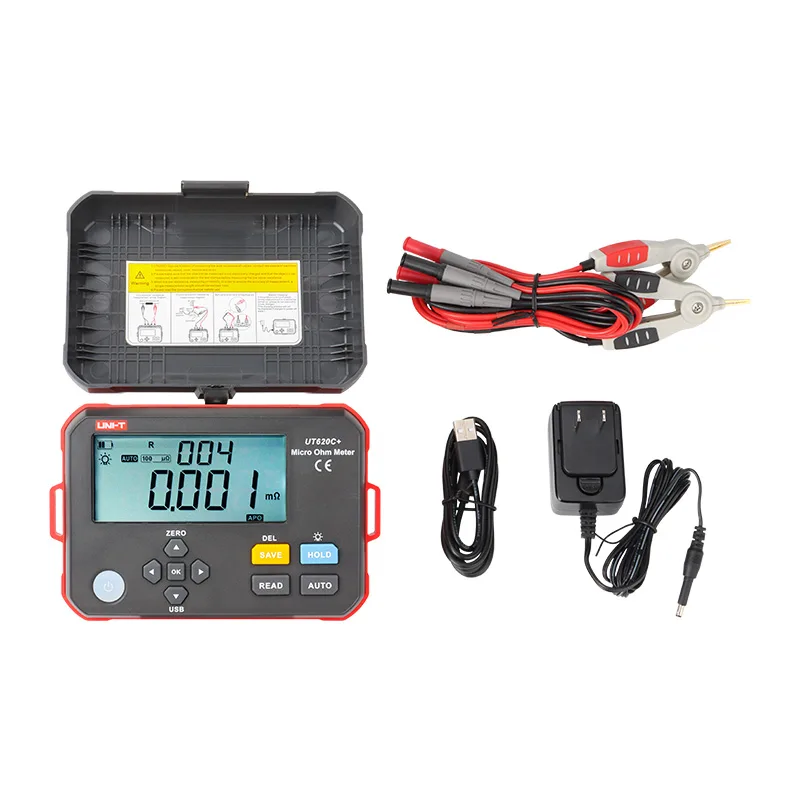
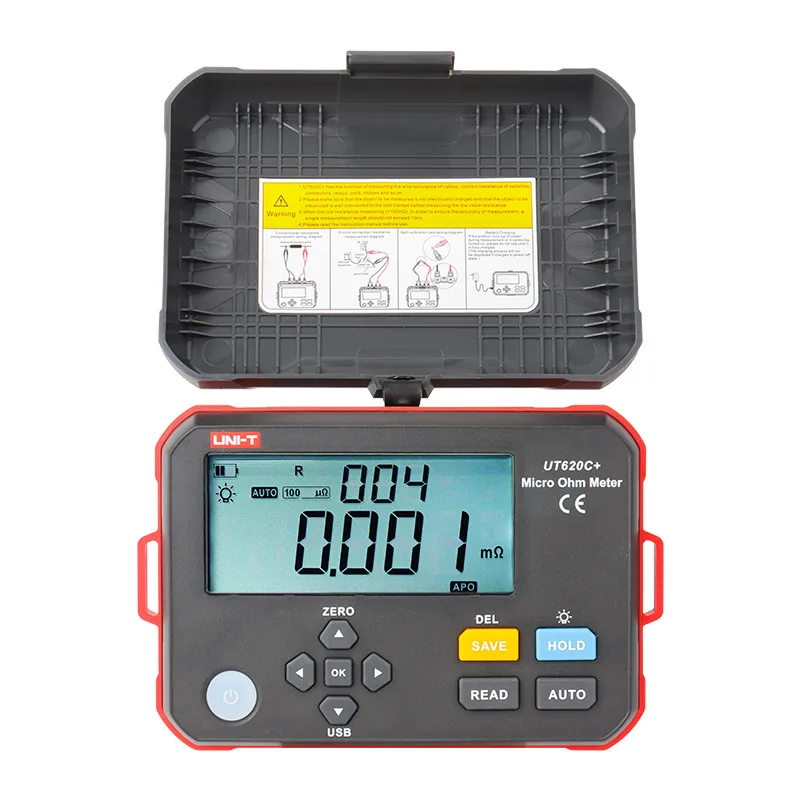
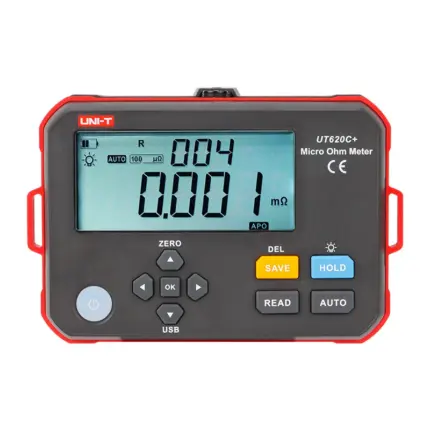
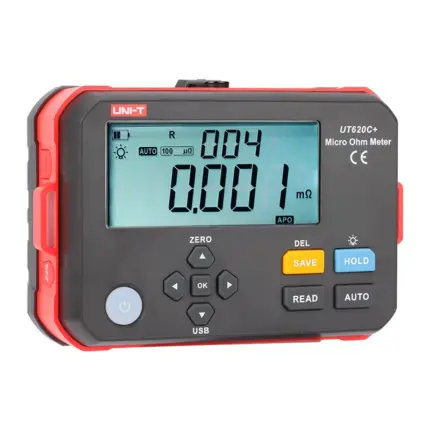
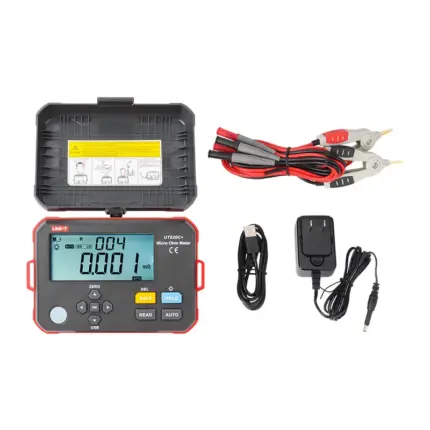
UNI-T UT620C+ Digital Micro-Ohmmeter with 1μΩ Resolution & 4-Wire Kelvin Measurement
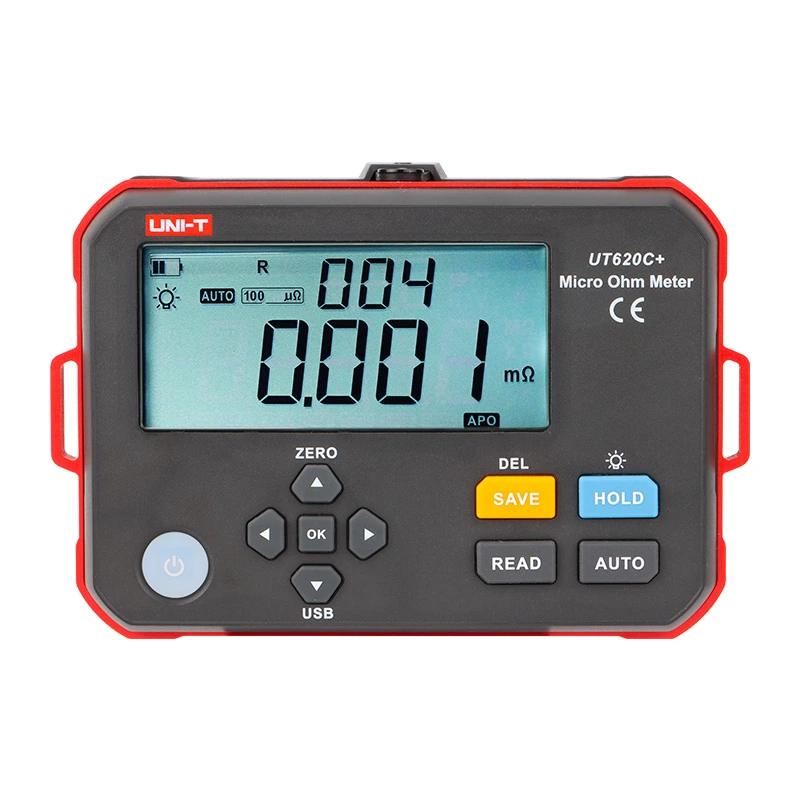
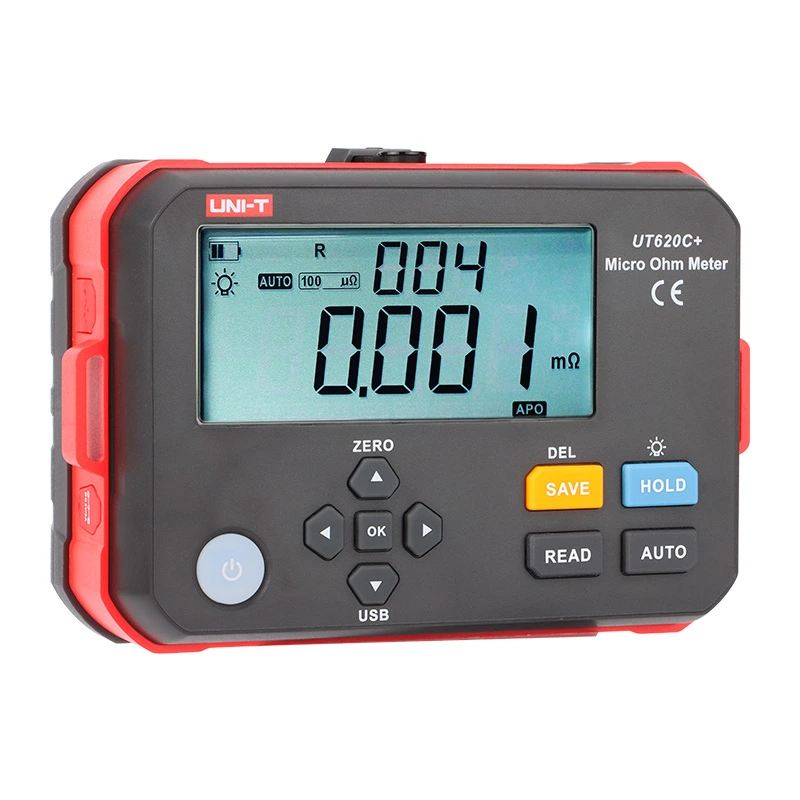
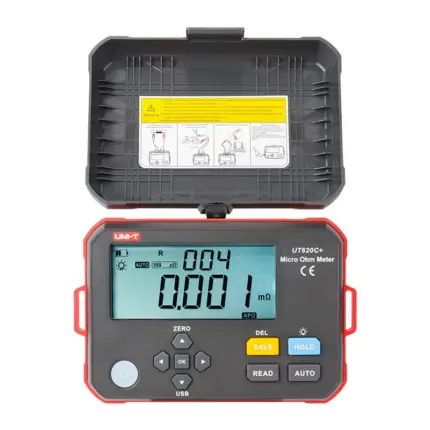
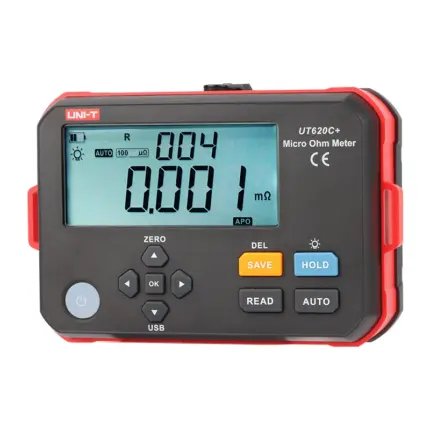
The UNI-T UT620C+ Digital Micro-Ohmmeter is a highly accurate, professional-grade portable resistance meter engineered to measure low resistance with extreme precision. Utilizing advanced four-wire Kelvin testing methods, this instrument covers a massive range from micro-ohms up to hundreds of kilo-ohms. This makes the UNI-T UT620C+ an indispensable tool for manufacturing, quality control, and field maintenance across telecommunications, power distribution, new energy vehicles, and heavy industrial plant grounding systems.
[fluentform id="1"]
Why the UT620C+ Should Be Used and Preferred
Eliminates Test Lead Resistance:
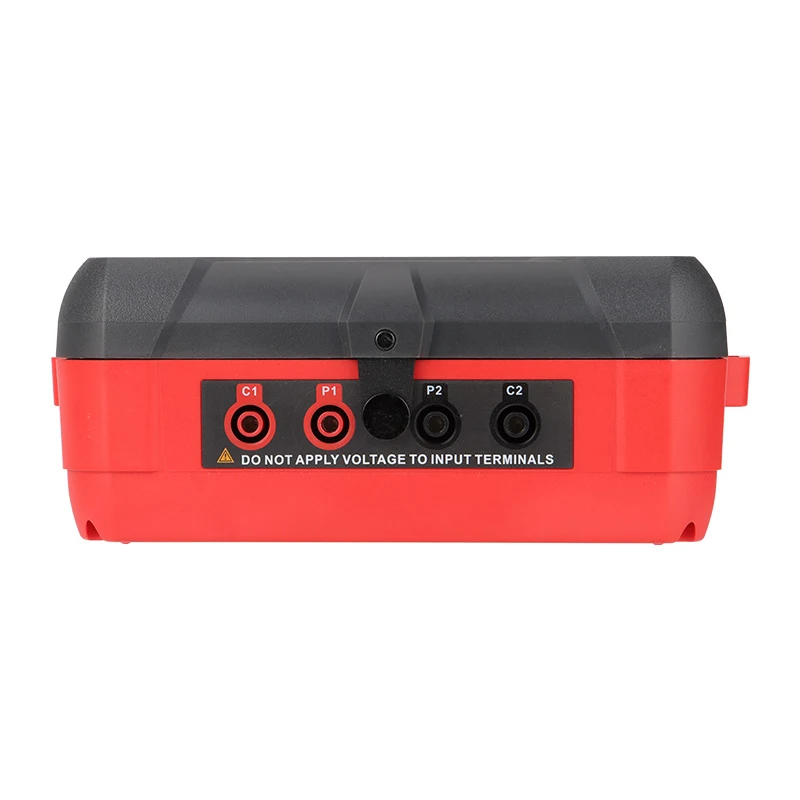
Employs a true Four-Wire Method to cancel out the inherent resistance of the test leads, ensuring rock-solid precision on low-resistance targets.
Pinpoint Industrial Fault Detection:
Delivers a class-leading 1μΩ resolution combined with a high ±0.1% Full Scale accuracy, allowing technicians to instantly catch micro-level degradation in welds, busbars, and connections.
Optimized for EV & Motor Manufacturing:
Designed explicitly for the testing and maintenance of large equipment, such as verifying winding and welding resistance of large motors and stators for hybrid and electric vehicles.
Measurement Specifications
| Resistance Range | Test Current | Resolution |
|---|---|---|
| 0.001 mΩ ~ 100.00 mΩ | 1A | 0.01 / 0.001 mΩ |
| 100.1 mΩ ~ 1000.00 mΩ | 100mA | 0.1 mΩ |
| 1.001 Ω ~ 10.000 Ω | 10mA | 0.001 Ω |
| 10.01 Ω ~ 100.00 Ω | 1mA | 0.01 Ω |
| 100.1 Ω ~ 1000.0 Ω | 100uA | 0.1 Ω |
| 1.001 kΩ ~ 10.000 kΩ | 10uA | 1 Ω |
| 10.01 kΩ ~ 100.00 kΩ | 3uA | 10 Ω |
| 100.1 kΩ ~ 300.0 kΩ | 3uA | 100 Ω |
Core Dynamic Parameters
Measurement Accuracy:
Max precision reaches ±0.1% Full Scale (FS) across standard conditions.
Open Circuit Driving Voltage:
Max voltage potential limited to ≤4.2V for delicate electronics protection.
Input Protection Circuit:
Safe up to ≤36V AC/DC against external accidental connections.
Core Device Features
The UT620C+ offers a broad resistance test range from 0.001 mΩ to 300.0 kΩ, backed by automated test current adjustments ranging from 1A down to 3μA. Key technical highlights include:
Storage & Protection:
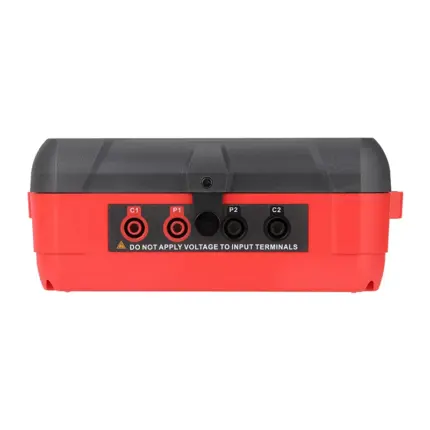
Internal memory for up to 500 data sets, input protection up to ≤36V AC/DC, and a Type-C USB interface for PC software connectivity.
Accuracy & Speed:
Base accuracy of ±0.1% FS, max open-circuit voltage of ≤4.2V, and a measurement cycle of 2 times per second.
Physical & Power Design:
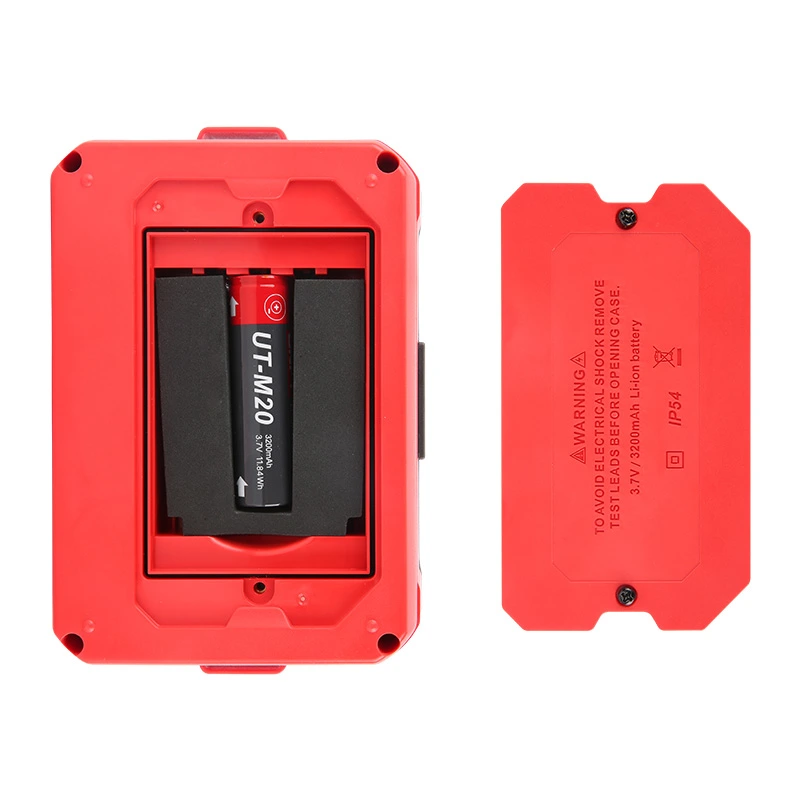
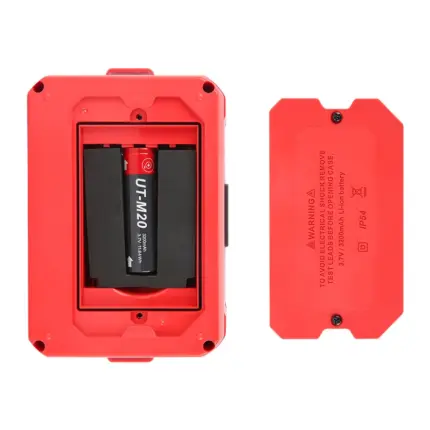
Powered by a DC 3.7V 3200mAh lithium battery (drawing ≤8W with a 15-minute auto power-off), featuring a backlit LCD, compact dimensions of 161 × 117 × 68 mm, a lightweight 480g build, an IP54 dust/moisture rating, and CE/RoHS certification.
Physical & Mechanical Attributes
- Product Dimensions: 161 mm × 117 mm × 68 mm
- Product Weight: 480g (including the internal battery pack)
- Housing Color: Classic UNI-T Black + Red industrial branding
- Enclosure Protection: IP54 rated (provides robust dust defense and splash-proof protection against water entry from any direction)
🔋 Power & Energy Management
- Power Supply: DC 3.7V, 3200mAh rechargeable lithium battery pack
- Power Consumption: Active measurement draw limits to ≤ 8W
- Energy Saving: Integrated Automatic Power Off triggers after 15 minutes of continuous inactivity to prolong field deployment cycles
📊 Interface & System Features
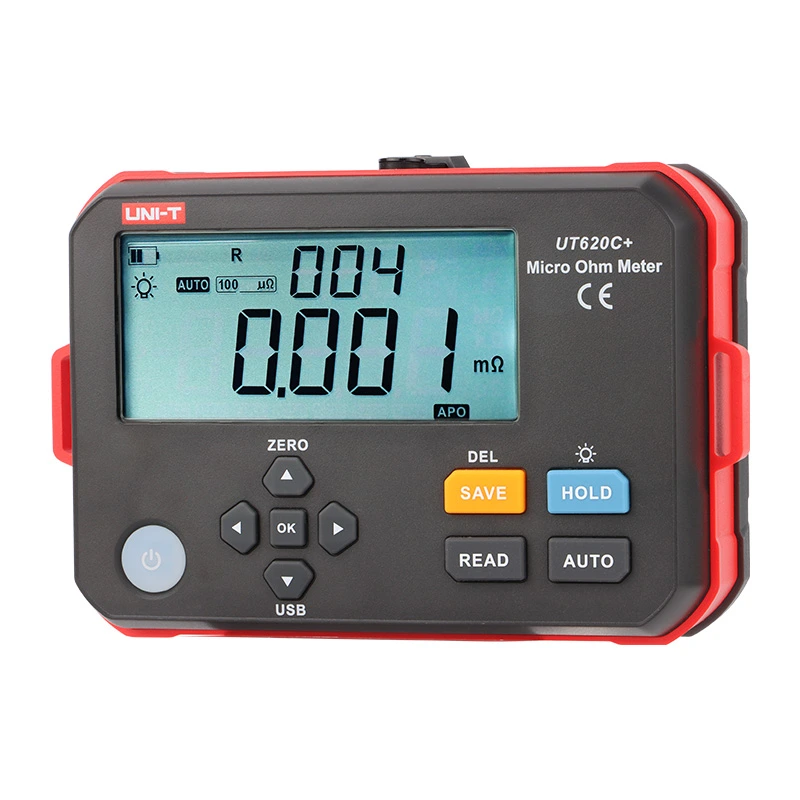
- Display Layout: Large Segment LCD module complete with a built-in backlight for enhanced visibility in low-light environments
- Low Battery Alert: Visual low battery indication icon warns the operator before the voltage threshold drops below operating norms
- Data Connectivity: Next-generation Type-C USB interface used for system integration and data analysis
- Memory Storage: Deep internal logging capable of saving up to 500 complete data sets
- Regulatory Compliance: Fully certified with international CE and RoHS quality benchmarks
Advantages Over Nearest Competitors
Ultra-Lightweight Ergonomics:
Weighing just 480g in a handheld format, the UNI-T UT620C+ replaces bulky 2–3 kg benchtop units for superior field mobility.
Extended Measurement Range:
The UNI-T UT620C+ spans up to 300.0 kΩ, eliminating the need to swap to a secondary multimeter for higher-resistance checks.
Modern Connectivity:
The UNI-T UT620C+ utilizes a standard Type-C USB connection instead of legacy proprietary interfaces for straightforward data logging.
RUGGED IP54 FIELD DESIGN
– The UNI-T UT620C+ is engineered to endure harsh industrial sites with a robust IP54 dust and splash-proof casing, fully backed by international CE and RoHS compliance.
Did You Know?
A micro-ohmmeter like the UNI-T UT620C+ is the exact opposite of a megohmmeter.
While both instruments measure electrical resistance, they are engineered for opposite ends of the spectrum to serve entirely different purposes:
The Direct Contrast Between Megohmmeter & Micro-Ohmmeter
| Feature | Megohmmeter(e.g., UT513C) | Micro-Ohmmeter(e.g., UT620C+) |
|---|---|---|
| What it measures | Extremely high resistance (Insulation) | Extremely low resistance (Conductors) |
| Measurement Scale | Millions to Trillions of Ohms (Mega-ohms to Tera-ohms) | Millionths of an Ohm (Micro-ohms) |
| Testing Goal | To prove that electricity cannot pass through. | To prove that electricity can pass through perfectly. |
| Voltage Output | Very High Voltage (Up to 5,000V DC) | Very Low Voltage (Safe open circuit ≤ 4.2V) |
| Current Applied | Tiny leakage currents (Nano-amps) | High testing currents (Up to 1A) |
Practical Example: Testing a Motor
- You use the Megohmmeter to test the insulation between the copper wire winding and the metal frame. You want a high reading (like 5TΩ) to prove electricity won't leak into the frame and shock someone.
- You use the Micro-ohmmeter (UT620C+) to test the copper winding wire itself from one end to the other. You want an incredibly low reading (like 0.001mΩ) to prove there are no bad welds, loose joints, or cracks blocking the flow of power.
In short, a megohmmeter checks for isolation, while a micro-ohmmeter checks for connection.