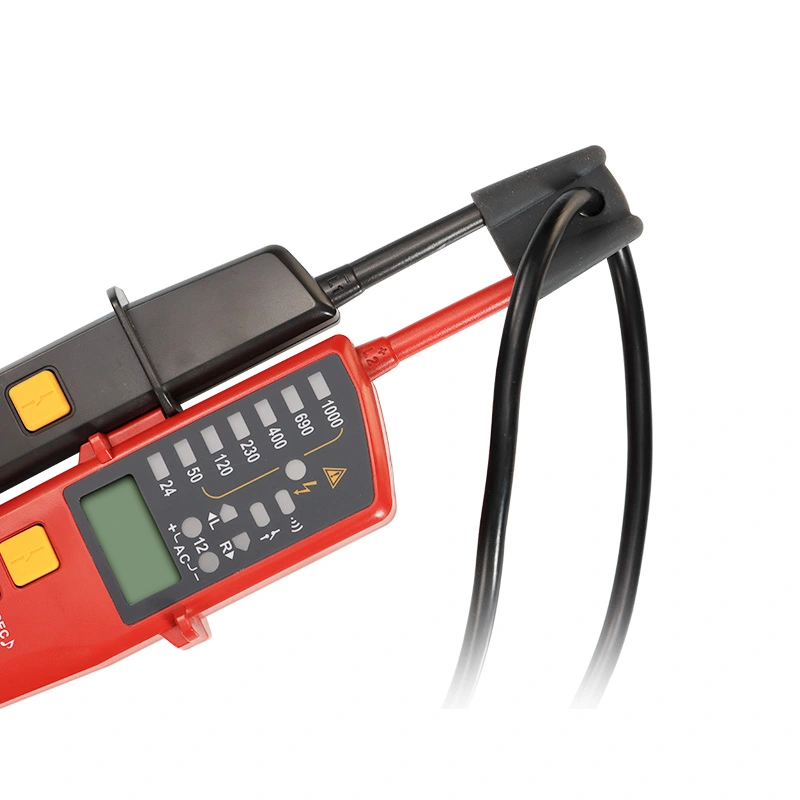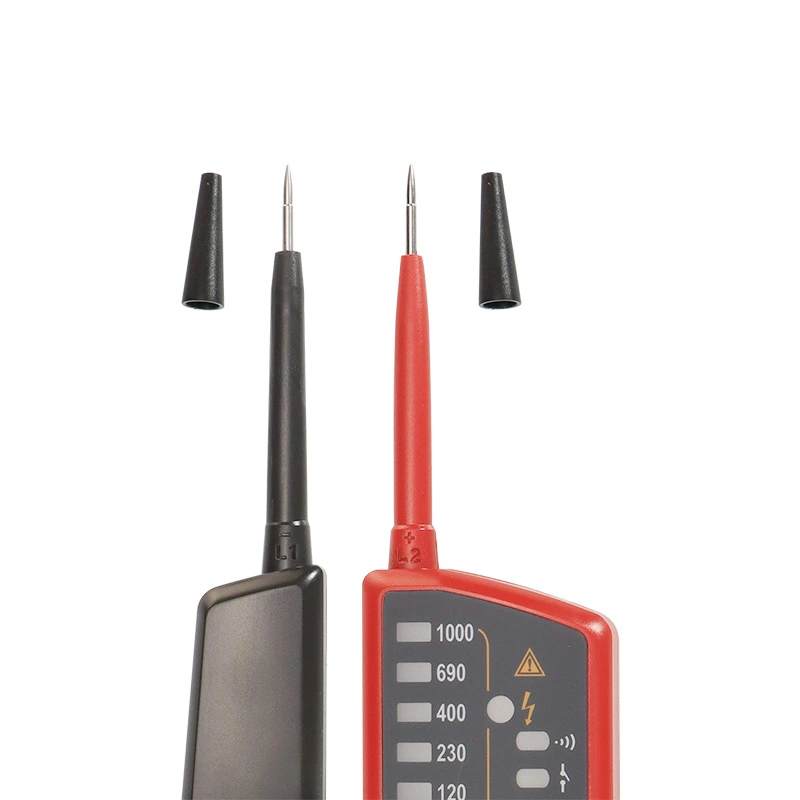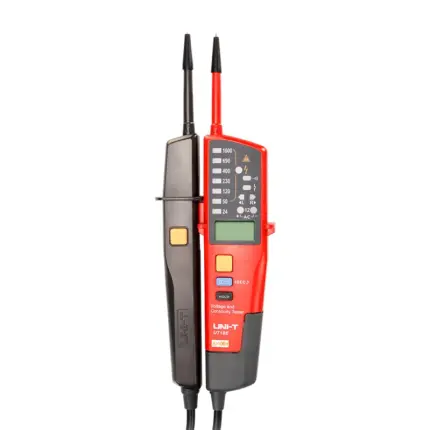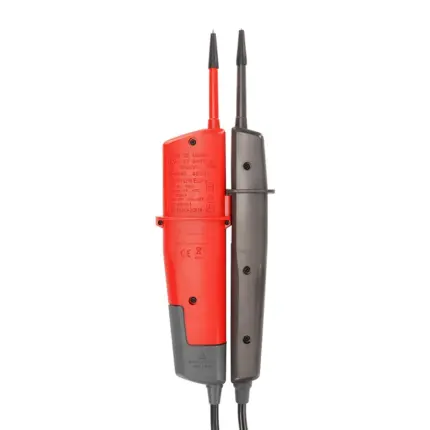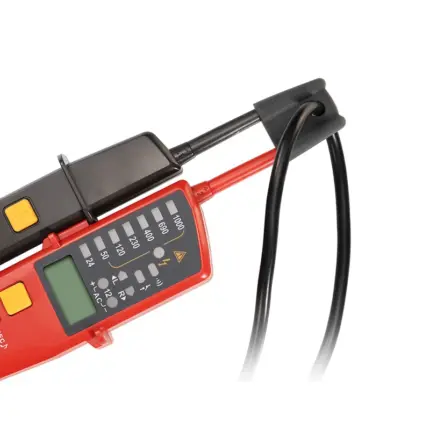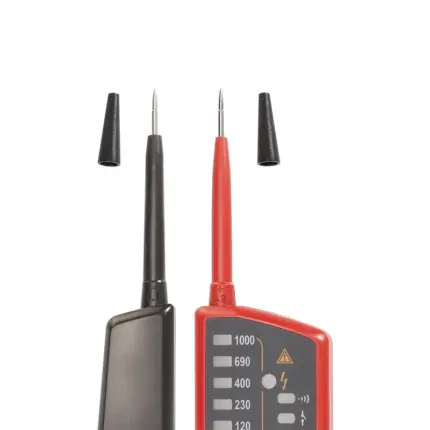

UNI-T UT18E Voltage & Continuity Tester with 1000V AC/DC Measurement, Phase Rotation and Residual Current Device Function

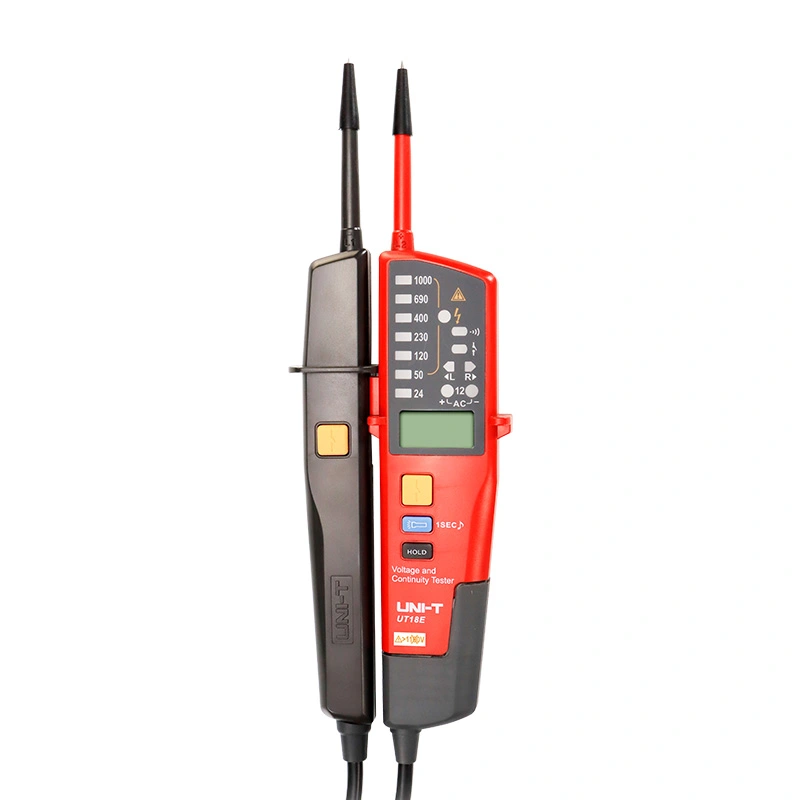
The UNI-T UT18E Voltage and Continuity Tester handles AC/DC measurements up to 1000V, three-phase rotation, and RCD testing. Combining a lightweight build with a dual LED/LCD readout, audible safety alarms, and a CAT IV 600V safety rating, it provides fast, reliable diagnostics for industrial and commercial use.

Why Choose and Prefer the UNI-T UT18E?

This tool offers reliable performance in industrial environments, combining ergonomic portability with an integrated buzzer alarm and unpowered testing capabilities for voltages from 100V to 1000V.

Measurement Specifications

Measurement FunctionOperational RangeBase Accuracy
AC/DC Voltage IndicationOperational RangeBase Accuracy6V±(1.5% + 1 digit)
12V±(1.5% + 2 digits)
24V±(1.5% + 2 digits)
50V±(1.5% + 3 digits)
120V±(1.5% + 4 digits)
230V±(1.5% + 5 digits)
400V±(1.5% + 5 digits)
690V±(1.5% + 5 digits)
1000V±(1.5% + 5 digits)
Phase Rotation Test100Vac to 400Vac (3-Phase)Frequency: 50Hz to 60Hz
Continuity Test0Ω to 60kΩAuditory Beeper & LED Light Indication
RCD TestOperating Voltage: 230VFrequency: 50Hz to 400Hz
Unpowered Testing Mode100V to 1000VLED/LCD Active Without Functional Battery Power
LCD Frequency Measurement40Hz to 400Hz±(3% + 5 digits)
Polarity DetectionPositive (+) & Negative (-)Automatic identification & display

Core Device Features

  • 01

    Dual Readout System:

    Simultaneous LED segment and LCD screen voltage readouts.

  • 02

    Unpowered Testing Mode:

    Measures active voltages (100V–1000V) without functional internal batteries.

  • 03

    Automatic Utility States:

    Includes auto-ranging, self-inspection, and low-draw standby (<10µA).

  • 04

    Integrated Workspace Lighting:

    Built-in flashlight for dark panels.

  • 05

    Silent Mode Operation:

    Mutes audio indicators for quiet settings.

General & Mechanical Characteristics

Physical Footprint:
272 mm x 85 mm x 31 mm.
Total Tool Weight:
277 grams (with batteries).
Safety Classifications:
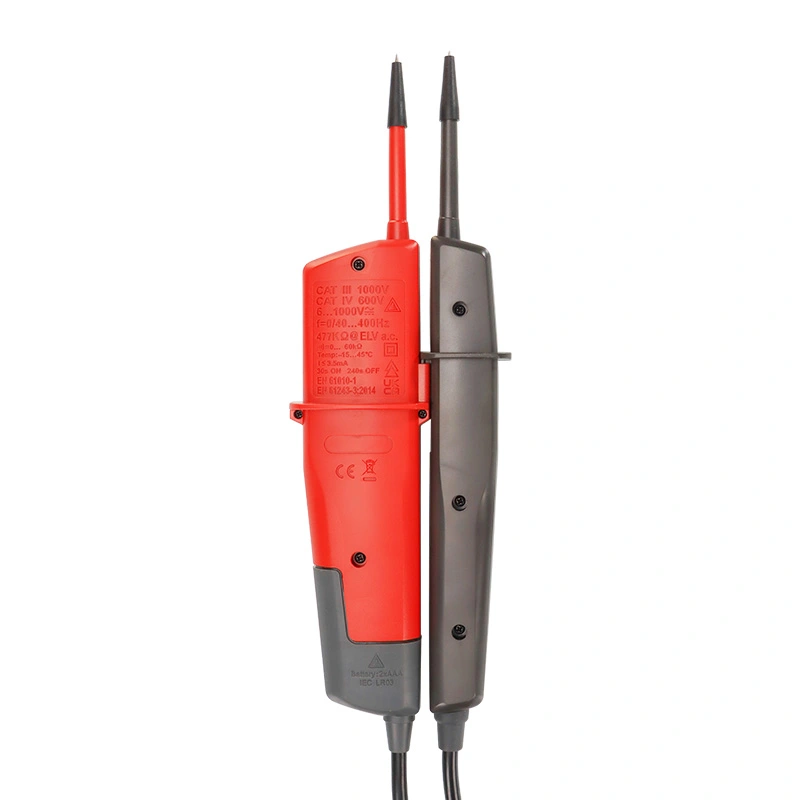
CAT III 1000V and CAT IV 600V.
Compliance Standards:
CE, UKCA, and RoHS.

Advantages Over Nearest Competitors

  1. 01

    Extended Voltage Testing Boundaries:

    Scales up to 1000V AC/DC, surpassing models capped at 690V.

  2. 02

    Dual LED + LCD Diagnostics:

    Provides stepped LED arrays alongside a digital LCD for cross-verification.

  3. 03

    Advanced Low Impedance and RCD Testing:

    Built-in RCD load testing prevents accidental breaker trips.

  4. 04

    Resilient Safety Architecture:

    Features 1100V over-voltage protection and CAT IV 600V safety compliance.

Safety Explained

What is an RCD? (Residual Current Device)

A Residual Current Device (RCD) is a critical, life-saving electrical safety component designed to prevent severe electric shocks and significantly reduce the risk of electrical fires. Unlike standard circuit breakers or fuses—which only protect wiring against massive overloads and short circuits—an RCD monitors electricity at a microscopic level to protect human life.

How Does It Work?

An RCD continuously monitors the balance of electrical current flowing through a circuit:

  1. 1

    The Balance:

    In a safe circuit, the current flowing in through the live wire must exactly equal the current returning out through the neutral wire.

  2. 2

    The Leak:

    If a fault occurs—such as someone accidentally touching a live wire or water getting into an appliance—some of the current leaks to the ground (earth).

  3. 3

    The Trip:

    The RCD instantly detects this tiny imbalance (the "residual current") and cuts off the electricity within milliseconds, stopping a potentially fatal electric shock before it can cause serious injury.

Why the RCD Test Function Matters in Test Meters

Premium electrical testers - like the UNI-T UT18E Voltage and Continuity Tester - come equipped with a built-in RCD Test Function.

When diagnosing a live circuit, the UNI-T UT18E can intentionally introduce a minor, highly controlled current imbalance. This allows electricians and maintenance teams to safely force-trip the system's installed RCD, verifying that the safety switch reacts within legally required, millisecond timeframes to guarantee the property is fully protected.