
- Actuators
- Adapters
- Air Blowers
- Air Conditioners
- Air Curtains
- Air Purifiers
- Anemometers
- Axial fans
- Ball Valves
- Belimo
- Blowers
- Brackets
- Brass
- Brazing Rods
- Capacitors
- Carrier Parts
- Clamp Meters
- Cleaning Products
- Coatings
- Compressors
- Condensate Pumps
- Connectors
- Contactors
- Copper Capillary
- Copper Coils
- Copper Straight Tubes
- Copper Strainers
The Silent Killer: Demystifying Refrigerant Migration

The Silent Killer: Demystifying Refrigerant Migration
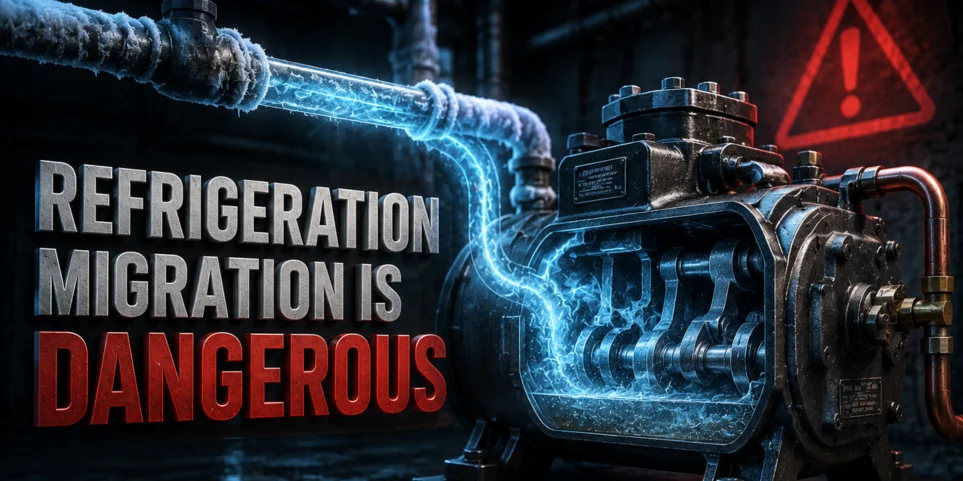
Refrigerant migration is a natural process where refrigerant vapor travels to and condenses in the coldest part of a cooling system when the compressor stops running.
This movement happens during the system’s off-cycle (when it is turned off). It is entirely driven by basic physics, acting like a self-contained weather system inside the copper pipes.
How Migration Works (The Physics)
Refrigerant behaves exactly like water vapor in the atmosphere, moving from areas of heat to areas of cold.
- Pressure Difference: Cold areas in an HVAC/R system have lower vapor pressure than warm areas.
- The Flow: Vaporized refrigerant naturally rushes toward the lowest pressure zone.
- Condensation: When the vapor hits that cold area, it turns back into a liquid and pools there.
- The “Oil Sponge”: Compressor lubrication oil acts like a magnet for refrigerant vapor. Even if the compressor isn’t the coldest spot, the oil creates a chemical attraction that sucks the refrigerant vapor directly into the compressor crankcase. A compressor crankcase is the bottom housing or reservoir of an HVAC/R compressor that stores the oil needed to lubricate the system’s moving parts. Think of it exactly like the oil pan at the bottom of a car engine.
Connection to Refrigerant Migration
As mentioned earlier, the crankcase is the primary danger zone for refrigerant migration. Because the crankcase holds oil, and refrigerant is naturally attracted to oil, refrigerant vapor will sneak into the crankcase during the off-cycle.
When the compressor restarts, this mixed fluid boils violently, causing the oil to foam and stripping the crankcase of its lubrication.
Why Migration is Dangerous
Migration creates major mechanical issues because liquids cannot be compressed. When the system turns back on, the pooled liquid refrigerant causes immediate damage:
- Liquid Slugging: Severe impact damage when heavy liquid refrigerant hits the moving pistons or scrolls of a compressor.
- Oil Dilution: The liquid refrigerant thins out the compressor oil, preventing it from lubricating the bearings.
- Crankcase Foaming: At startup, sudden pressure drops cause the liquid refrigerant in the oil to flash-boil violently. This turns the oil into foam, which gets pumped out of the compressor, leaving it running completely dry.
How Systems Prevent It
To stop migration from destroying equipment, systems use three main defenses:
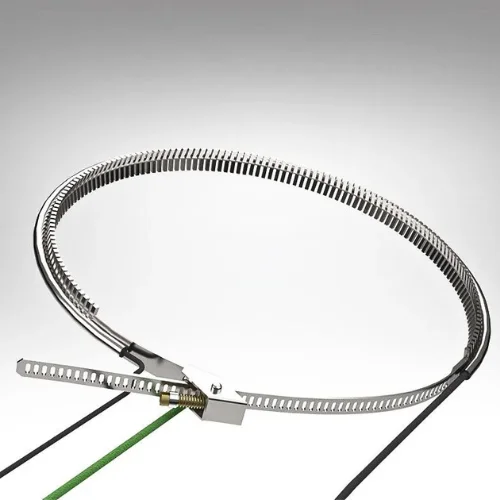
- Crankcase Heaters: Small electric heaters that keep the compressor warm so refrigerant vapor cannot condense inside it.
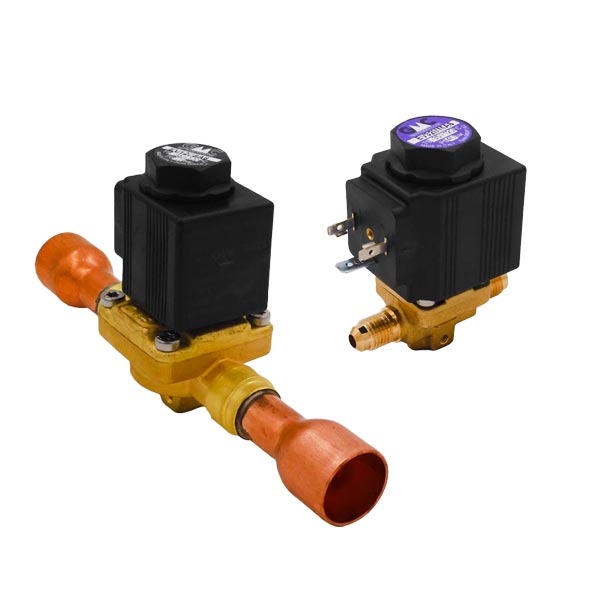
- Pump-Down Cycles: Solenoid valves that trap the refrigerant safely inside the outdoor condenser before the compressor shuts off. Liquid line solenoid valves act as the electronic gatekeepers in a pump-down cycle, stopping the flow of refrigerant so the compressor can pack it away before turning off.
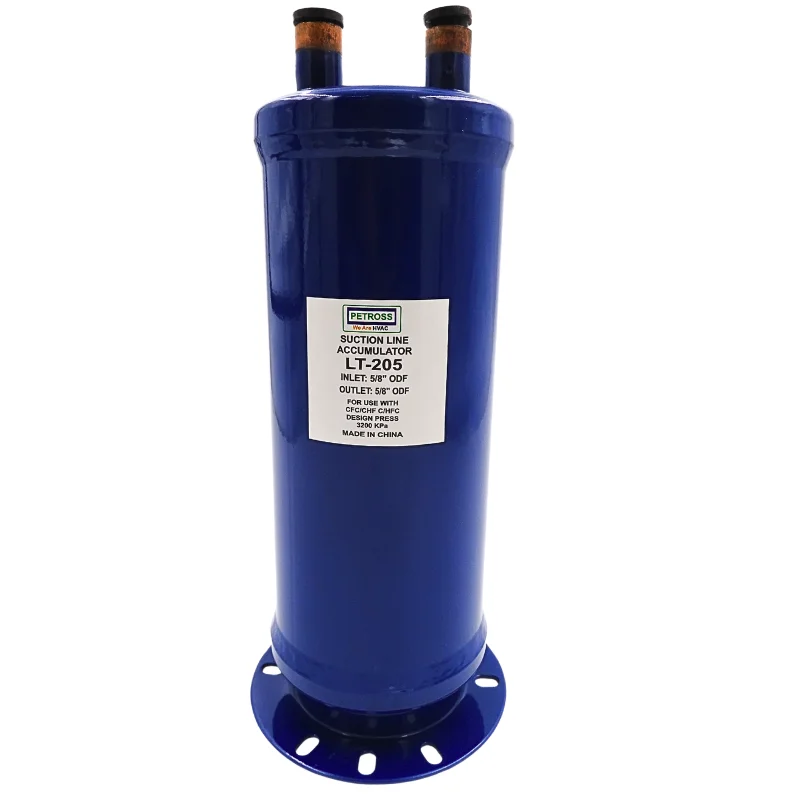
- Suction Accumulators: Catch-tanks that trap any migrating liquid before it can enter the compressor cylinders.