
- Actuators
- Adapters
- Air Blowers
- Air Conditioners
- Air Curtains
- Air Purifiers
- Anemometers
- Axial fans
- Ball Valves
- Belimo
- Blowers
- Brackets
- Brass
- Brazing Rods
- Capacitors
- Carrier Parts
- Clamp Meters
- Cleaning Products
- Coatings
- Compressors
- Condensate Pumps
- Connectors
- Contactors
- Copper Capillary
- Copper Coils
- Copper Straight Tubes
- Copper Strainers
HVAC Tech’s Guide to INFICON Handheld Leak Detectors

HVAC Tech’s Guide to INFICON Handheld Leak Detectors
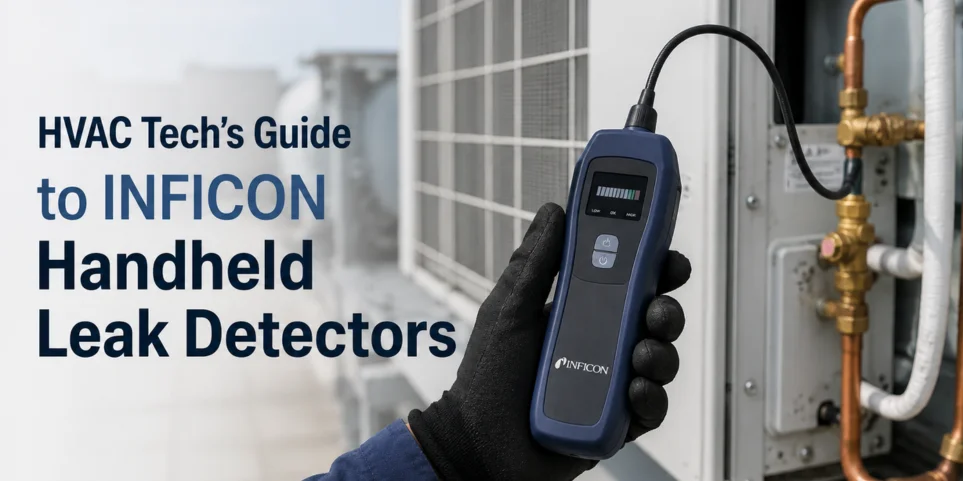
INFICON provides industry-standard technology and pro-grade tools for Commercial Refrigeration, VRF, and Multi-Gas Versatility. If you work on massive supermarket racks, cold storage, or systems utilizing diverse gases—like carbon dioxide (CO₂), flammables, or standard halogens—INFICON offers specialized solutions for every application.
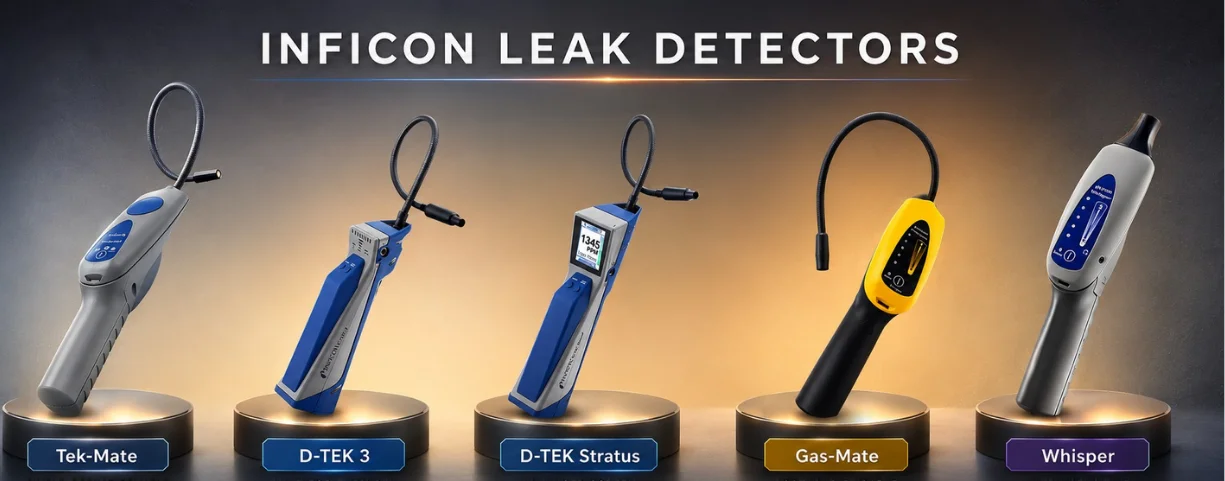
The 5 models of INFICON covered here are as follows:
- D-TEK Stratus refrigerant leak detector
- D-TEK 3 refrigerant leak detector
- TEK-Mate refrigerant leak detector
- Gas-Mate combustible gas leak detector
- Whisper ultrasonic leak detector
The Flagship Advantage
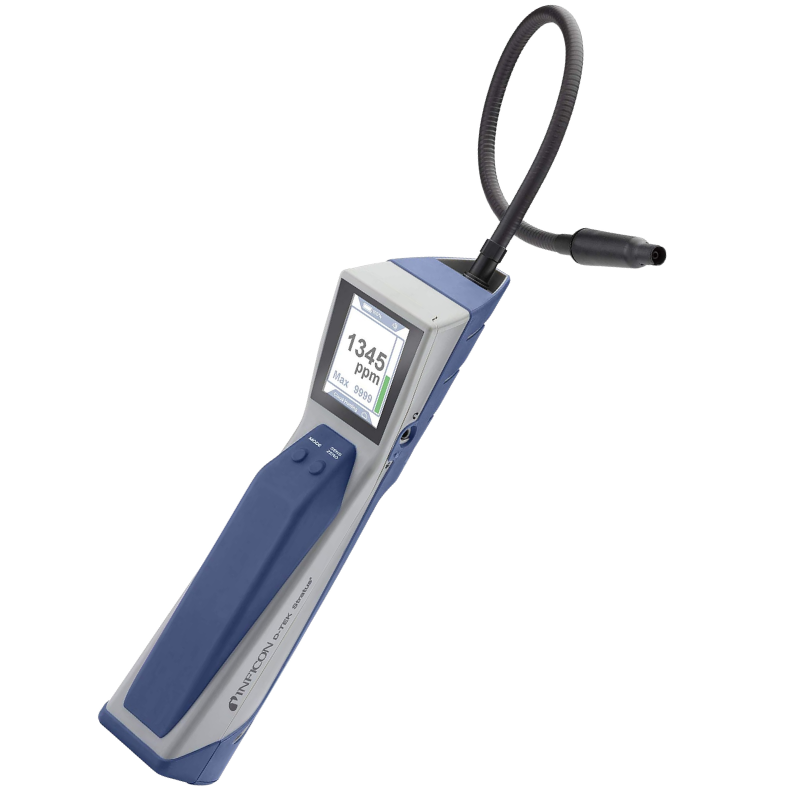
The premium D-TEK Stratus is widely considered the most advanced handheld detector on the market. Its exclusive Cloud Hunting mode gives a true numerical PPM readout. This allows you to pinpoint a leak’s location in heavily contaminated spaces where other detectors get overwhelmed and lock up.
Its killer feature is the Interchangeable sensor cartridges. Instead of buying separate tools, you can buy one D-TEK body and hot-swap sensors for regular refrigerants, CO₂, or A3 hydrocarbons (Propane/Isobutane).
| Feature | TEK-Mate | D-TEK 3 | D-TEK Stratus | Gas-Mate | Whisper |
| Sensor Type | Heated Diode | Infrared (IR) | Infrared (IR) | Solid-State Catalytic | Heterodyne Ultrasonic |
| Sensor Lifespan | ~ 100 Hours | ~ 1,000 Hours | ~ 1,000 Hours | Durable Long-Life | Infinite (No chemical wear) |
| Max Sensitivity | 0.4 oz/yr | 0.03 oz/yr (0.02 for A2L) | 0.03 oz/yr (0.02 for A2L) | 5 PPM (Methane) | 1 psi pressure drops |
| Primary Display | LED Barrier / Beep | LED Barrier / Beep | Color LCD Screen | LED Barrier / Adjustable Tick | LED Barrier / Headphones |
| Cloud Hunting | No | No | Yes (PPM Readout) | No (Manual Tick Adjustment) | No (Acoustic tracking) |
| Gas Options | Halogens / A2L | Interchangeable (Halogen, A2L, CO₂, A3) | Interchangeable (Halogen, A2L, CO₂, A3) | Combustibles Only (Propane, Methane, etc.) | Universal (Any pressurized gas or vacuum) |
| Power Source | 2 x D-Cell | Li-Ion Battery | Li-Ion Battery | 2 x D-Cell | 2 x D-Cell |
1. Sensor Technology and Lifespan
The type of sensor determines how long the tool lasts, how often you must buy replacements, and if it will give false alarms from moisture, oil, or wind.
- Heated Diode (Economy): Works by heating a ceramic element to create ions. It degrades rapidly when exposed to large amounts of refrigerant and gets triggered by moisture, soap bubbles, or oil.
- Infrared (Premium): Uses light absorption to scan for specific gas signatures. It never degrades from gas exposure and ignores moisture entirely.
- Surface Catalytic Solid-State: Used for combustibles. It heats a catalytic surface that oxidizes combustible gases, changing electrical resistance to trigger an alarm.
- Heterodyne Ultrasonic: Does not “sniff” gas molecules at all. It uses an acoustic crystal sensor to listen for the specific ultrasonic sound frequencies (40.5 kHz) created by pressurized gas escaping a microscopic hole.
INFICON Models Compared:
- TEK-Mate: Uses a Heated Diode sensor. Effective for basic troubleshooting but has a shorter sensor lifespan (~100 hours) and can falsely trigger on dirty or wet evaporator coils.
- D-TEK 3 & D-TEK Stratus: Both use a premium Infrared (IR) sensor. The sensor lasts up to 1,000 hours, does not degrade over time, and will not false alarm on water vapor or oil residue.
- Gas-Mate: Uses a Surface Catalytic Solid-State sensor optimized for hydrocarbons. It boasts twice the sensitivity of competing combustible detectors and features a durable sensor element designed for harsh environments.
- Whisper: Uses an Ultrasonic Acoustic sensor. It has no gas sensor element to degrade or replace, making its core technology infinitely reusable. It is completely immune to false alarms from background gases, wind, or moisture.
2. Sensitivity Levels
Sensitivity measures how small of a micro-leak the tool can physically register. It is stated in ounces per year (oz/yr), grams per year (g/yr), parts per million (PPM), or pressure thresholds.
INFICON Models Compared:
- TEK-Mate: Offers 0.4 oz/yr (11 g/yr) sensitivity. Excellent for residential work and medium-to-large leaks, but struggles with micro-leaks or low-pressure seepage.
- D-TEK 3 & D-TEK Stratus: Both boast a maximum standard sensitivity of 0.03 oz/yr (1 g/yr). For specific A2L gases like R1234yf, sensitivity sharpens to 0.02 oz/yr (0.5 g/yr). This extreme precision finds microscopic pinholes inside massive commercial chillers before a system loses its charge.
- Gas-Mate: Measures combustible gases in parts per million, boasting an ultra-high sensitivity of 5 PPM for Methane. It instantly flags tiny natural gas or propane plumbing leaks.
- Whisper: Sensitivity depends on system pressure rather than gas volume. It can detect a leak dropping down to a 1 psi (0.07 bar) pressure threshold through an orifice as small as 0.005 inches.
3. Display Type and “Cloud Hunting” Capabilities
Standard detectors give simple audible ticks and light bars. Advanced units tell you exactly how much gas is floating in the room, while ultrasonic units measure sonic decibel intensity.
INFICON Models Compared:
- TEK-Mate & D-TEK 3: Use Progressive LED lights and audible beeps. You must move the probe around to judge if the signal is getting stronger or weaker.
- D-TEK Stratus: Includes a large Color LCD Screen featuring a dedicated Cloud Hunting Mode. It displays a real-time PPM readout. This lets you walk into a contaminated room, track where the gas concentration is densest, and find the general leak area without zeroing out the signal prematurely.
- Gas-Mate: Features a Progressive LED Audio/Visual display. It utilizes an adjustable tick-rate wheel to manually mute background combustible concentrations as you approach the leak source.
- Whisper: Uses a Progressive LED display with an audible alarm. It is packaged with padded headphones so technicians can physically hear the pitch and intensity of the leak hiss, filtering out ambient mechanical room noise.
4. Gas Versatility and Flammables
With the industry transitioning to lower-GWP (Global Warming Potential) gases, your tool must safely and legally sniff out new refrigerant classes.
INFICON Models Compared:
- TEK-Mate: Detects standard CFCs, HCFCs, and HFCs. It is not rated for specialized natural refrigerants like CO₂.
- D-TEK 3 & D-TEK Stratus: Feature Interchangeable Sensors. Out of the box, they detect standard refrigerants and A2L flammables. If you switch to a supermarket CO₂ system or a hydrocarbon system, you simply pull out the standard IR sensor and plug in a specialized CO₂ or Hydrocarbon sensor cartridge.
- Gas-Mate: Specifically engineered for Combustible Gases and Hydrocarbons only. It sniffs out Natural Gas, Methane, Propane (R290), Isobutane (R600a), Hydrogen, Ethane, Formes Gas (95% Nitrogen / 5% Hydrogen), and cyclopentane. It cannot detect standard CFC/HCFC/HFC refrigerants.
- Whisper: Offers Absolute Versatility. Because it listens to the sound of escaping pressure, it detects any gas type (including Nitrogen pressure-tests, Compressed Air, Vacuum leaks, CO₂, Steam, Helium, and all halogens).
A2L and Flammable Gas Evaluation
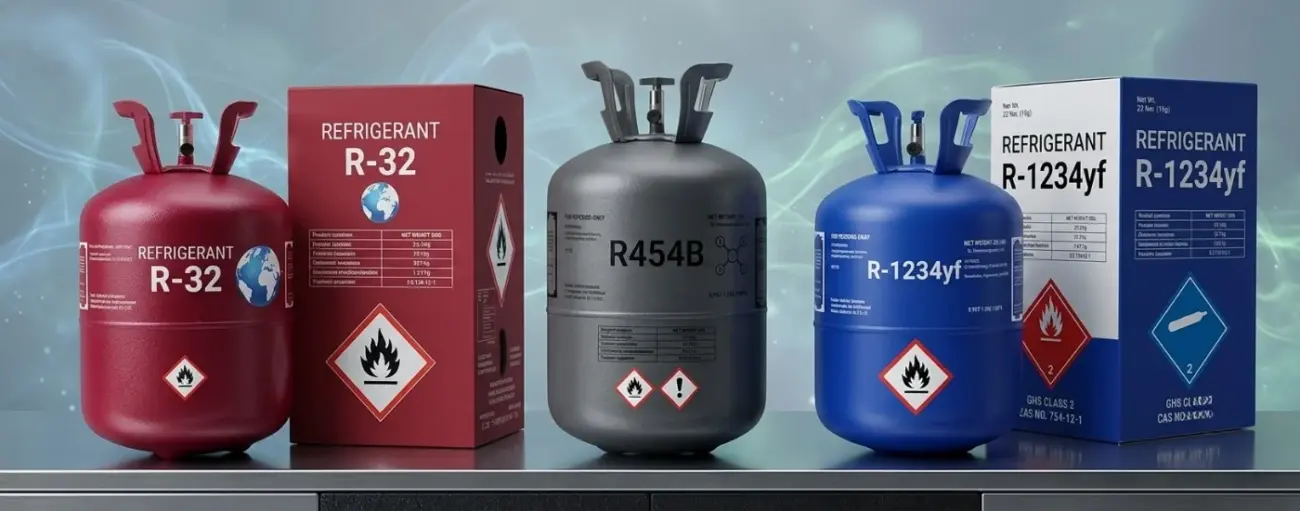
A2L refrigerants (such as R32, R454B, and R1234yf) are classified by ASHRAE as mildly flammable. Evaluating how INFICON’s full expanded lineup manages A2L and A3 gases requires looking at safety certification, sensor physics, and cross-contamination response.
| Feature Assessment | TEK-Mate | D-TEK 3 | D-TEK Stratus | Gas-Mate | Whisper |
| A2L Safe & Certified? | Yes | Yes | Yes | Yes (Intrinsically Safe) | Yes (Intrinsically Safe) |
| R1234yf Sensitivity | Baseline | Ultra-high (0.02 oz/yr) | Ultra-high (0.02 oz/yr) | N/A (Not recommended) | Universal (Pressure dependent) |
| A3 Hydrocarbon Upgrade? | No | Yes (Via separate sensor) | Yes (Via separate sensor) | Native (Out of the box) | Universal (No sensor needed) |
1. Safety Certifications and Intrinsic Safety
Never use a standard electronic tool on a flammable gas unless it is explicitly certified. If a tool draws in a highly concentrated pocket of flammable gas, a non-certified device could spark and ignite the vapor.
- The Benchmark: Look for independent, third-party testing validating that the tool is A2L Certified under safety standards like EN14624:2020.
- TEK-Mate: Newer iterations are A2L Certified. It safely checks systems containing R32 or R1234yf without ignition risk.
- D-TEK 3 & D-TEK Stratus: Both are fully A2L Certified out of the box using their standard infrared sensors.
- Gas-Mate: Intrinsically safe and specifically UL913 Class 1, Division 1, Group D certified. It is built to operate safely in environments containing highly explosive A3 hydrocarbon vapors.
- Whisper: Intrinsically safe. Because it contains no heating elements, sparks, or chemical sensors, it is inherently safe to use around any flammable gas atmosphere
2. Sensitivity and False Alarms
- TEK-Mate (Heated Diode): Detects A2L gases effectively but treats them similarly to other halogenated gases. Because A2Ls are often used in dense, newly installed systems, the lower sensitivity threshold (0.4 oz/yr) means it may miss micro-fissures. It is also prone to triggering false alerts if it sniffs nearby background solvents or joint adhesives used during installation.
- D-TEK 3 & D-TEK Stratus (Infrared): The infrared optical cell specifically targets the exact molecular wavelength of HFOs and HFC-blends. It achieves an incredibly sharp sensitivity of 0.02 oz/yr (0.5 g/yr) specifically for R1234yf. It ignores installation solvents, moisture, and wind.
- Gas-Mate (Solid-State Catalytic): Not recommended for A2L diagnostic leak locations. While it will alert on an A2L gas due to its mild flammability, its sensor chemistry is tuned for hydrocarbon chains (Methane/Propane). It lacks the precision configuration needed to target tight oz/yr refrigerant standards.
- Whisper (Ultrasonic Acoustic): Completely blind to gas chemistry. It will not experience false alarms from background solvents, joint adhesives, wind, or moisture. It measures the physical velocity of the leak, making it highly reliable for flagging high-pressure A2L/A3 structural joint failures.
3. The “A2L vs. A3 Flammable” Boundary
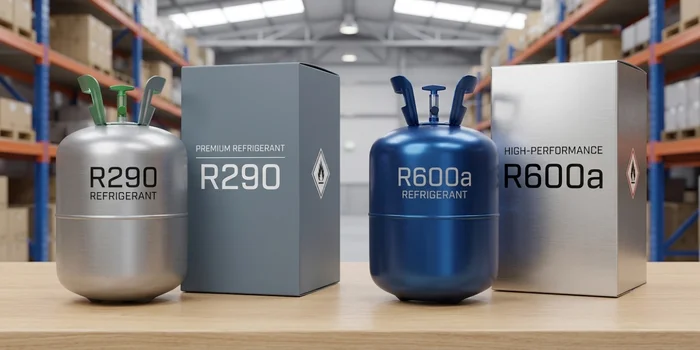
Technicians often confuse mildly flammable A2L gases with highly flammable A3 gases (like R290 Propane or R600a Isobutane).
- TEK-Mate: Strictly limited to baseline halogenated refrigerants and A2Ls. It cannot detect A3 hydrocarbons or CO₂ systems.
- D-TEK 3 & D-TEK Stratus: While the stock infrared sensor handles A2L gases perfectly, they feature an interchangeable sensor matrix. If you move from an A2L air conditioner to an A3 commercial refrigeration unit, you pull the standard sensor out and plug in a dedicated Flammable Refrigerant Sensor (A3 Hydrocarbon) to safely track down propane or isobutane leaks.
- Gas-Mate: This is a native A3 specialist. It cannot pinpoint regular A2L fluorinated gases with high precision, but it is the ultimate tool for finding raw fuel or industrial R290 propane leaks.
- Whisper: Crosses the boundary effortlessly. It does not differentiate between A2L and A3 because it only registers noise. It is ideal for checking systems under a high-pressure Nitrogen holding charge before any flammable gas is even introduced to the equipment.
Summary Checklist for Fleet Deployment
To choose the right INFICON tool for your truck, match your primary job site tasks to the criteria below:
- Choose TEK-Mate if you need a low-cost backup tool for standard residential HFC systems and light A2L residential installs.
- Choose D-TEK 3 if you want premium commercial IR reliability, long sensor lifespans, and future-proof expansion into CO₂ or A3 systems via swappable cartridges.
- Choose D-TEK Stratus if you routinely work on massive commercial systems where background gas contamination is high. The Cloud Hunting PPM display saves hours of diagnostic time.
- Choose Gas-Mate if your workload includes commercial gas heating pipelines, gas meters, or systems relying purely on explosive hydrocarbon natural gases/refrigerants.
- Choose Whisper if you frequently leak-check vacuum systems, perform high-pressure Nitrogen pressure-drops, or need to find structural micro-leaks outdoors in high wind conditions.