

- Actuators
- Adapters
- Air Blowers
- Air Conditioners
- Air Curtains
- Air Purifiers
- Anemometers
- Axial fans
- Ball Valves
- Belimo
- Blowers
- Brackets
- Brass
- Brazing Rods
- Capacitors
- Carrier Parts
- Clamp Meters
- Cleaning Products
- Coatings
- Compressors
- Condensate Pumps
- Connectors
- Contactors
- Copper Capillary
- Copper Coils
- Copper Straight Tubes
- Copper Strainers
Why should industrial oils like refrigeration oils be stored in metal cans instead of plastic containers?

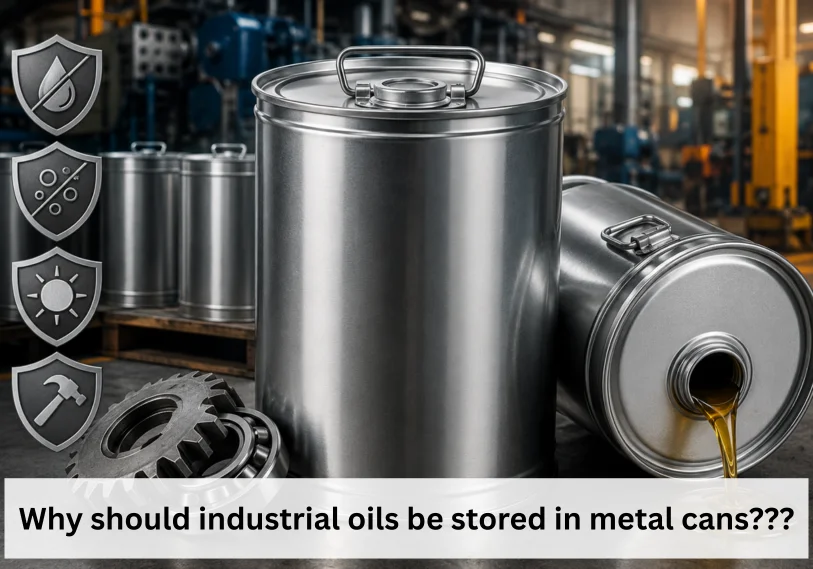
Why should industrial oils like refrigeration oils be stored in metal cans instead of plastic containers?
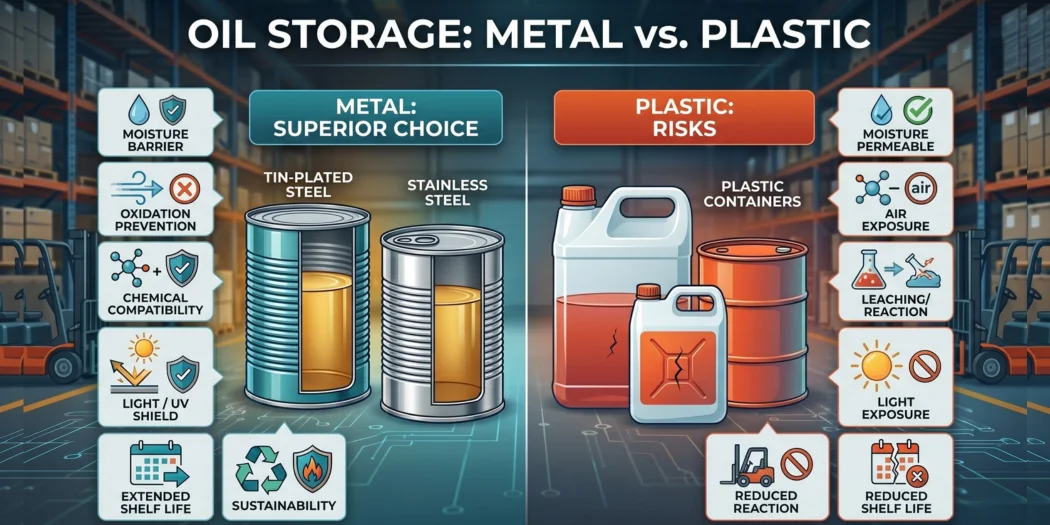
Industrial oils should be stored in metal cans primarily because metal provides an absolute barrier against moisture, oxygen, and light, which prevents chemical degradation and safeguards the oil’s physical properties. Unlike alternative materials, metals like tin-plated steel or stainless steel offer the rugged structural integrity needed to withstand harsh factory environments without leaking, cracking, or chemically reacting with complex oil additives.
Proper container choice directly preserves the lubricant’s performance, reduces machine downtime, and satisfies strict facility safety standards.
Why Metal Cans Outperform Other Materials
- Complete Moisture Block: Plastic containers are actually microscopic-level moisture-permeable. Highly hygroscopic industrial fluids (like synthetic refrigeration oils) will pull water through plastic walls, leading to acid formation, additive breakdown, and equipment damage. Metal stops this process entirely.
- Oxidation Prevention: Metal shields the fluid from oxygen exposure. Air exposure triggers oxidation, which rapidly alters the oil’s viscosity, depletes active additives, and ruins its lubricating consistency.
- Chemical Compatibility: Industrial oils contain complex, aggressive chemical additives. Certain plastics degrade, leach toxins, or chemically react when exposed to these formulas, whereas tin-plated steel or stainless steel are highly non-reactive.
- Light and UV Shielding: Metal completely blocks light. Prolonged exposure to sunlight and UV rays accelerates the thermal breakdown and degradation of fluid compounds.
- Industrial Durability: Factory and warehouse environments involve physical hazards, heavy machinery, and temperature extremes. Heavy-duty metal cans resist mechanical impacts, punctures, and pressure changes far better than standard polymers.
Key Benefits of Metal Packaging
Using proper metal containers ensures a highly efficient workspace:
- Extended Shelf Life: Keeps the fluid identical from the first pour to the last drop, maximizing the standard 3-to-5-year shelf life.
- Sustainability: Steel and tin-plated cans are magnetic, making them easily sortable and infinitely recyclable without losing material quality.
- Fire Safety: Metal resists high heat and won’t melt instantly during warehouse fire incidents, helping isolate flammable fluid hazards
Common Real-World Ratings
- IP20: Common for indoor home electronics; safe from fingers but not water.
- IP54: Found on general outdoor fixtures; resists typical dust and light rain.
- IP65 / IP66: Standard for heavy-duty outdoor lighting and security cameras.
- IP67 / IP68: Found on modern smartphones and smartwatches to survive accidental drops into pools or sinks.
Did you know? You can find examples of various IP ratings across our Belimo products and Hidria axial fans. Contact us to know more.