
- Actuators
- Adapters
- Air Blowers
- Air Conditioners
- Air Curtains
- Air Purifiers
- Anemometers
- Axial fans
- Ball Valves
- Belimo
- Blowers
- Brackets
- Brass
- Brazing Rods
- Capacitors
- Carrier Parts
- Clamp Meters
- Cleaning Products
- Coatings
- Compressors
- Condensate Pumps
- Connectors
- Contactors
- Copper Capillary
- Copper Coils
- Copper Straight Tubes
- Copper Strainers
Thermowell

Thermowell
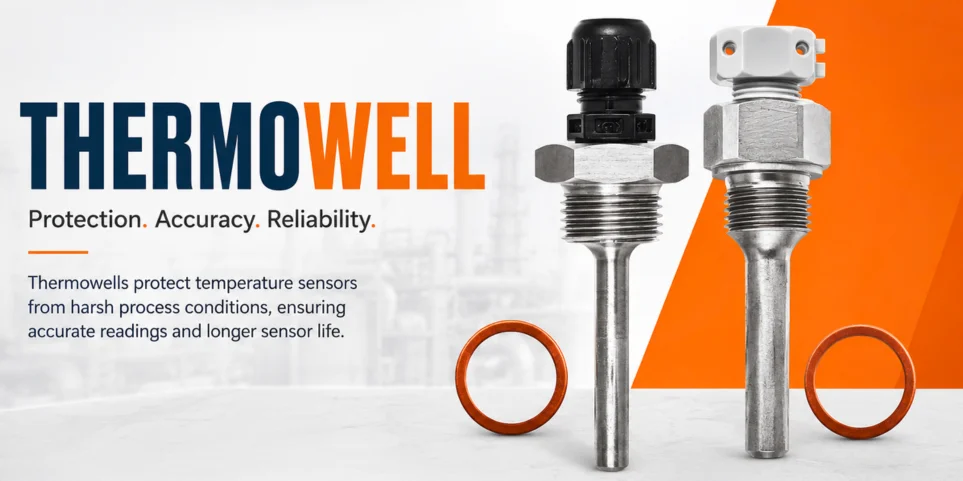
In HVAC (Heating, Ventilation, and Air Conditioning) systems, thermowells act as protective, sealed metal tubes that house temperature sensors (such as thermistors, RTDs, or bimetal thermometers) in fluid lines and tanks. They shield these delicate sensors from the pressure, velocity, and corrosive effects of flowing water or refrigerants, while still allowing the system’s temperature to transfer accurately to the sensor.
Why Thermowells are Used in HVAC
Thermowells provide several critical functions that ensure HVAC systems run efficiently and are easy to maintain:
- Sensor Protection: They protect delicate temperature probes from fluid-induced vibrations, sudden pressure changes, and corrosive chemicals.
- Easy Maintenance & Replacement: Because the sensor sits inside the protective tube rather than directly in the fluid, technicians can remove or replace a faulty sensor without needing to shut down or drain the entire HVAC system.
- System Containment: They permanently maintain the pressure boundary of piping and vessels, ensuring that water, steam, or refrigerant does not leak.
- Improved Sensor Longevity: By keeping the sensor isolated from harsh process environments, thermowells prevent sensor degradation, resulting in a longer lifespan and more reliable data.
Common Types & Materials
In HVAC applications, thermowells typically use the following materials depending on the operating conditions:
- Brass: Often used in standard HVAC water applications (like chilled or hot water lines) because it is a superior conductor of heat and works well under lower pressures.
- Stainless Steel: Used for higher-pressure systems or when increased resistance to corrosion is required.