- Actuators
- Adapters
- Air Blowers
- Air Conditioners
- Air Curtains
- Air Purifiers
- Anemometers
- Axial fans
- Ball Valves
- Belimo
- Blowers
- Brackets
- Brass
- Brazing Rods
- Capacitors
- Carrier Parts
- Clamp Meters
- Cleaning Products
- Coatings
- Compressors
- Condensate Pumps
- Connectors
- Contactors
- Copper Capillary
- Copper Coils
- Copper Straight Tubes
- Copper Strainers
Positive Temperature Coefficient (PTC) Thermistors in HVAC/R

Positive Temperature Coefficient (PTC) Thermistors in HVAC/R
In refrigeration and air conditioning (HVAC/R) systems, Positive Temperature Coefficient (PTC) thermistors serve two completely different, mission-critical roles depending on where they are installed: starting the compressor motor or protecting the compressor from burning out.
Because their electrical resistance increases drastically as they get hot, they act like automatic, solid-state switches without any moving parts.
1. Compressor Start Assist (The Starter Relay)
In single-phase, fractional-horsepower compressors (found in home refrigerators, freezers, and small residential air conditioners), a PTC thermistor serves as the start relay.
- The Startup Boost: When the compressor is idle, the PTC ceramic disc inside the relay housing is cold and has very low resistance (typically 5 to 15 ohms). When power is applied, a massive burst of current flows directly through the PTC to the motor’s start winding, creating the high starting torque needed to kick-start the compressor.
- Cutting Out the Winding: Within 1 to 2 seconds, the high current passing through the PTC disc causes it to heat up rapidly. Its resistance spikes exponentially (up to 10,000+ ohms). This acts like an “open switch,” cutting off power to the start winding so the compressor can safely and efficiently run solely on its run winding.
- The Cooling Limitation: A known trait of PTC start relays is that if the system shuts down unexpectedly, it cannot restart immediately. The compressor must remain off for several minutes to allow the PTC disc to cool back down and drop its resistance. If the system tries to restart too early, the compressor will stall and trip the thermal overload protector.
2. Motor Thermal Protection (Embedded Winding Sensors)
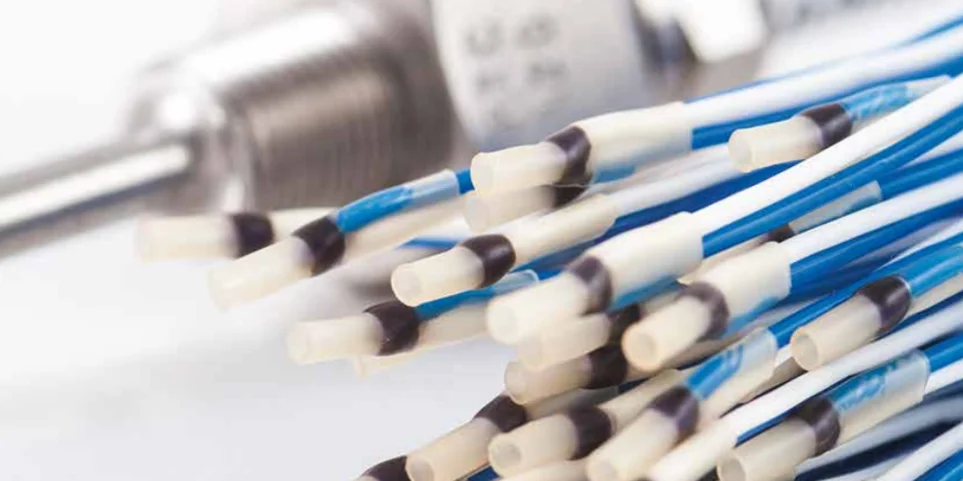
In large commercial refrigeration and industrial HVAC compressors (such as Bitzer, Copeland, or Carlyle units), PTC thermistors are used as over-temperature safety sensors.
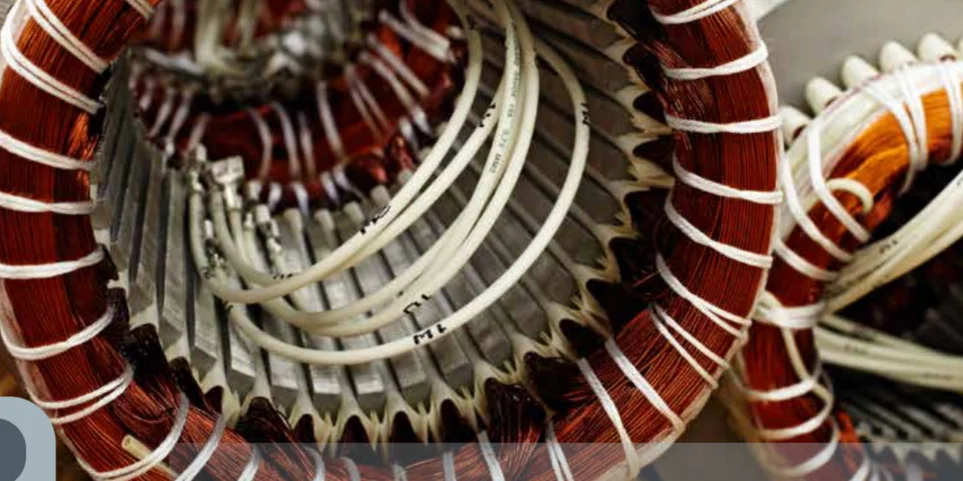
- Winding Embedding: Instead of a separate relay box, tiny bead-like PTC sensors are physically embedded directly into the copper stator windings inside the sealed compressor housing during factory assembly.
- The Relay Combo: These sensors are wired directly to an external electronic control module, most famously the Kriwan INT69 Motor Protector Module. You can see our range of Kriwan motor protectors here https://wearehvac.com/kriwan-industrie-elektronik-gmbh/
- The Safety Trip: Under normal operating temperatures, the PTC sensors maintain a steady, low resistance. However, if the compressor overheats due to mechanical failure, a refrigerant leak, or a voltage phase issue, the winding temperature hits a critical threshold. The PTC sensor’s resistance instantly skyrockets. The Kriwan INT69 Module detects this spike and breaks the 24V control circuit, shutting down the compressor contactor to prevent the expensive motor from melting.
Direct Feature Comparison
| Feature / Metric | Compressor Start Relay | Winding Protection Sensor |
| Primary Function | Supplies temporary torque boost to start single-phase motors. | Monitors internal heat to prevent catastrophic motor failure. |
| Location | Mounted externally on the compressor’s terminal pins. | Embedded internally inside the copper motor windings. |
| System Complexity | Standalone solid-state component. | Requires an external control module (e.g., Kriwan INT69). |
| Equipment Size | Domestics / Light Commercial (Fridges, window ACs). | Heavy Commercial / Industrial (Chillers, large walk-ins). |
| Reset Behavior | Must cool down naturally for 3–5 minutes before restarting. | Stays tripped until the windings cool down or the module is reset. |