
- Actuators
- Adapters
- Air Blowers
- Air Conditioners
- Air Curtains
- Air Purifiers
- Anemometers
- Axial fans
- Ball Valves
- Belimo
- Blowers
- Brackets
- Brass
- Brazing Rods
- Capacitors
- Carrier Parts
- Clamp Meters
- Cleaning Products
- Coatings
- Compressors
- Condensate Pumps
- Connectors
- Contactors
- Copper Capillary
- Copper Coils
- Copper Straight Tubes
- Copper Strainers
What do poles on an electrical isolator mean?

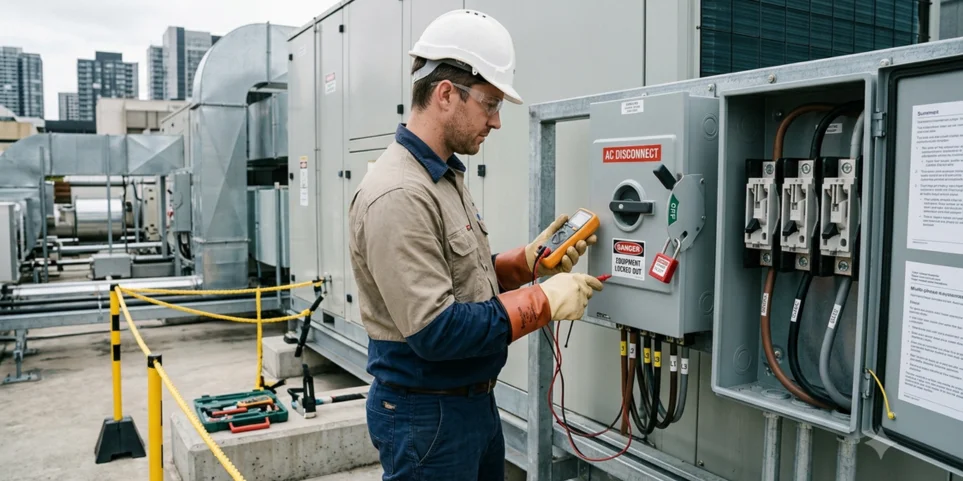
What do poles on an electrical isolator mean?
In an electrical isolator (also called a main switch or disconnect switch), “poles” refer to the number of separate power lines that are physically cut off or connected when you flip the switch handle.
An isolator is a manually operated safety switch. Its sole purpose is to completely kill the power to a piece of machinery or AC unit so a technician can safely work on it without risk of electrocution.
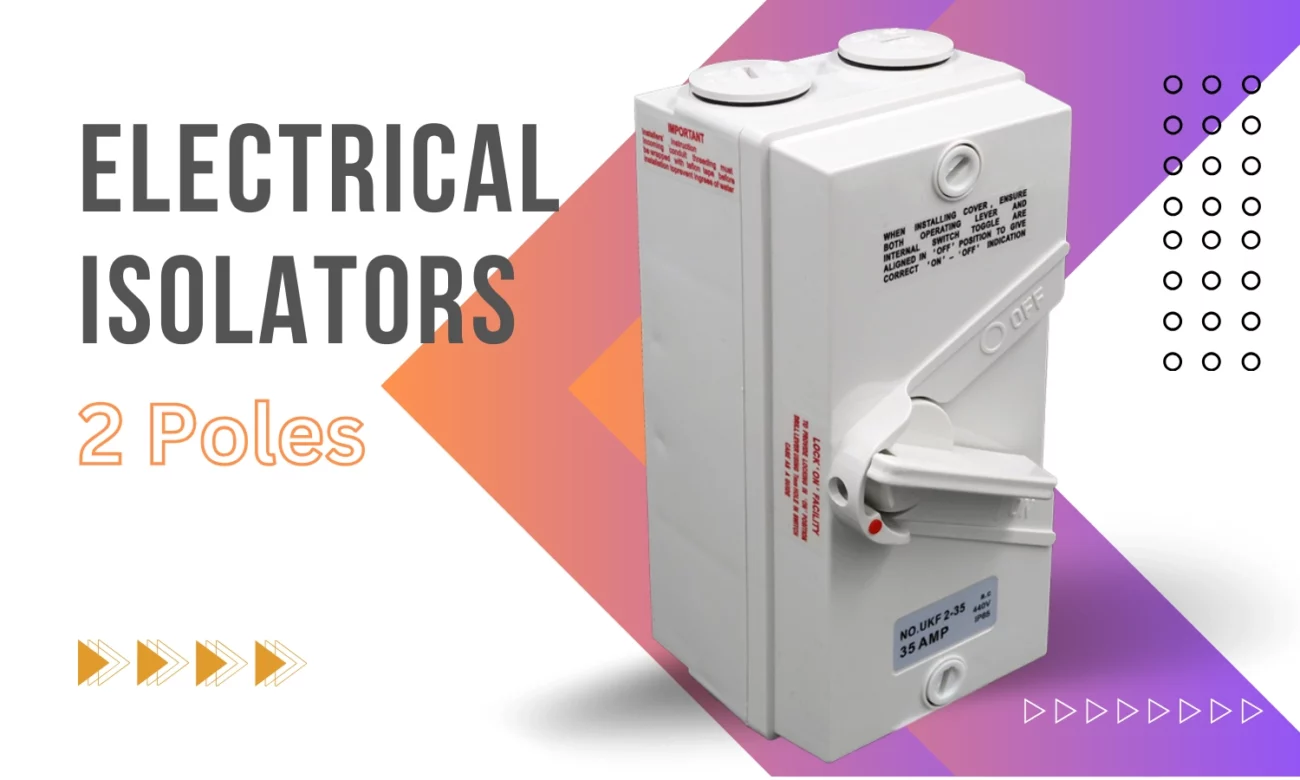
2-Pole Isolator (Single-Phase)
A 2-pole isolator switches two distinct electrical paths simultaneously.
- How it works: It disconnects both the Live (L) line and the Neutral (N) line (or both hot legs, L1 and L2, in 240V systems).
- The Safety Rule: For standard single-phase residential appliances, you cannot just isolate the live wire. Current can still flow back through the neutral line under certain fault conditions. A 2-pole isolator guarantees that all current-carrying wires are broken.
- Common Examples:
- Outdoor residential air conditioning split systems.
- Domestic electric water heaters.
- Home EV charging stations.
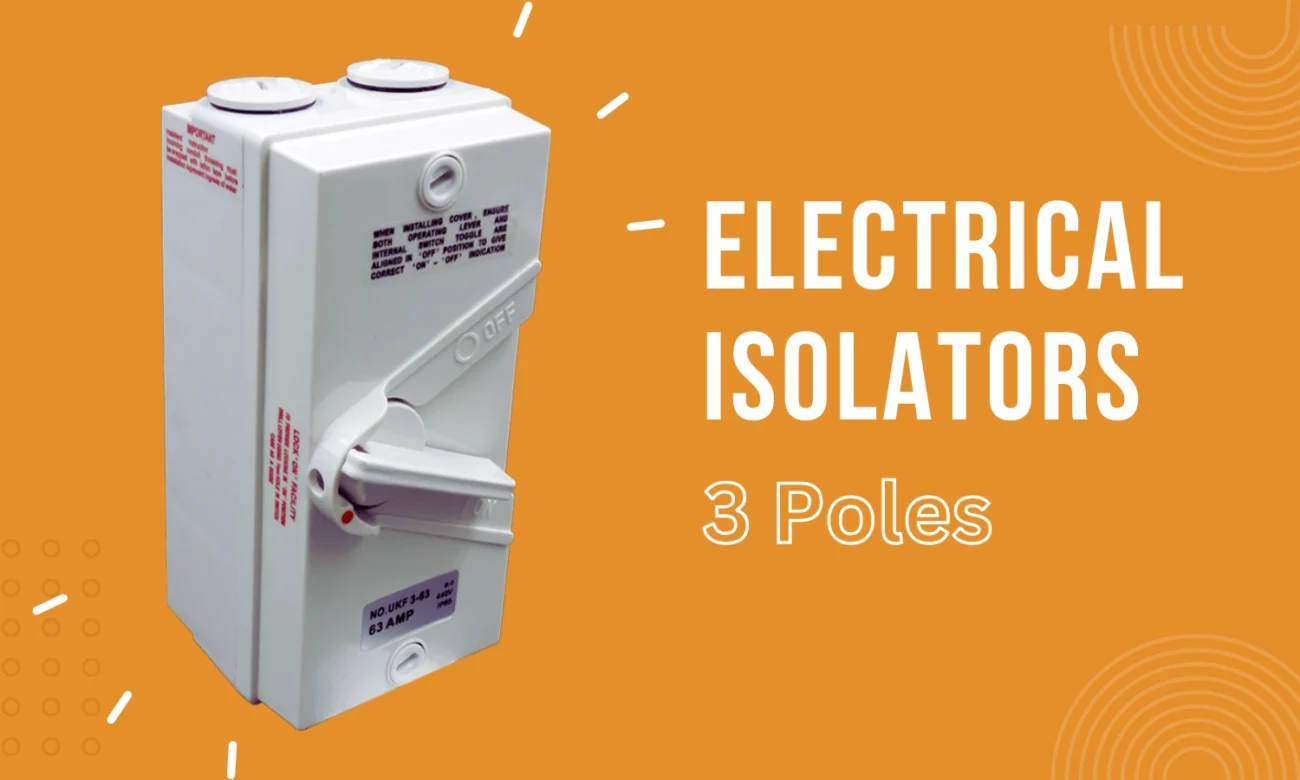
3-Pole Isolator (Three-Phase / TP)
A 3-pole isolator switches three distinct electrical paths simultaneously.
- How it works: It disconnects all three live phases (L1, L2, and L3) of a three-phase power supply at the exact same moment. It does not switch a neutral wire, as many pure three-phase industrial motors do not use one (they only use the three phases and a permanent ground).
- The Safety Rule: In a three-phase system, leaving even one phase connected creates a severe hazard. If one phase remains live, the motor can stall, overheat, or back-feed high voltage into the system.
- Common Examples:
- Commercial rooftop HVAC package units (RTUs).
- Industrial manufacturing machinery and pumps.
- Large commercial refrigeration chillers.
Summary
Built for the heat: Our 2-pole and 3-pole electrical isolators feature silver cadmium contacts designed to perform in punishing desert environments.